Stump Grinding guide
Is There a Better Time of Year to Grind Stumps in Brisbane?
Yes, Timing Does Matter — But Probably Not How You Think
The honest answer: stump grinding in Brisbane works year-round, and there is no single month where the job simply cannot be done. That said, certain seasons make the work easier, cheaper, and more effective — and if you have any flexibility in your schedule, it is worth knowing the difference before you book.
How Brisbane's Climate Affects the Job
Brisbane does not have a true winter the way southern cities do. What it has is a wet season (roughly November through March) and a dry season (April through October), and those two phases affect stump grinding in distinct ways.
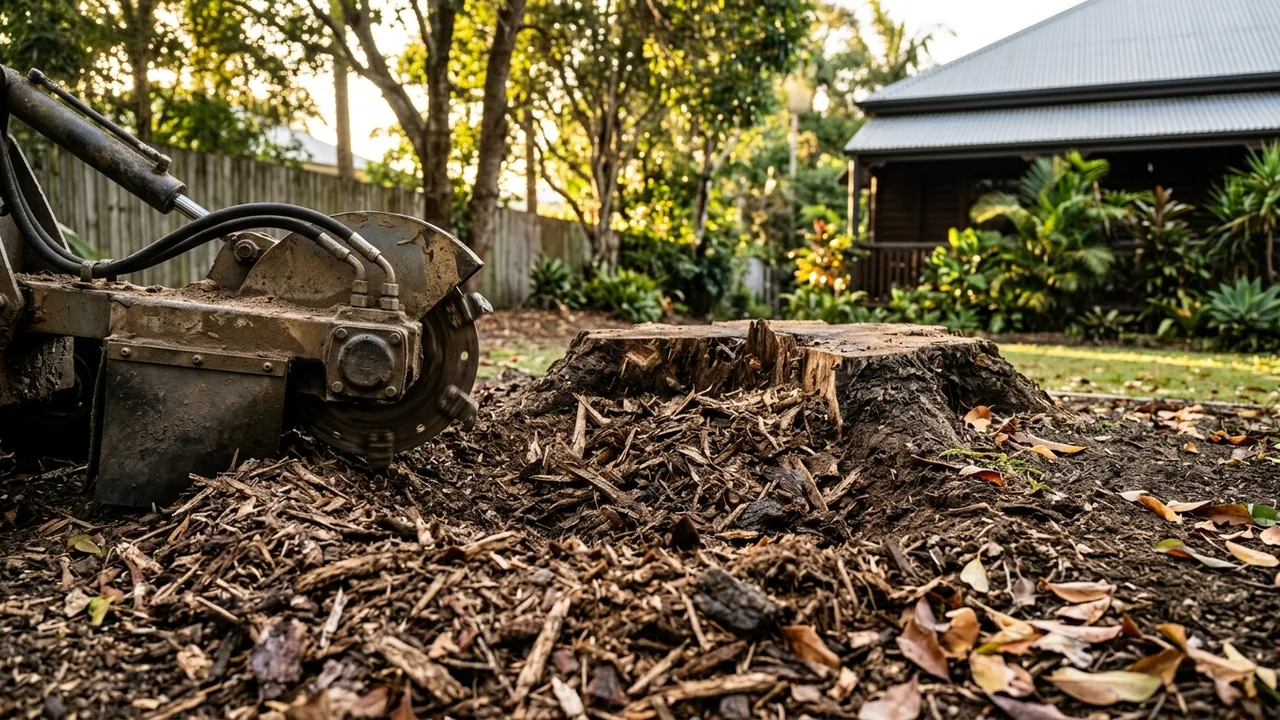
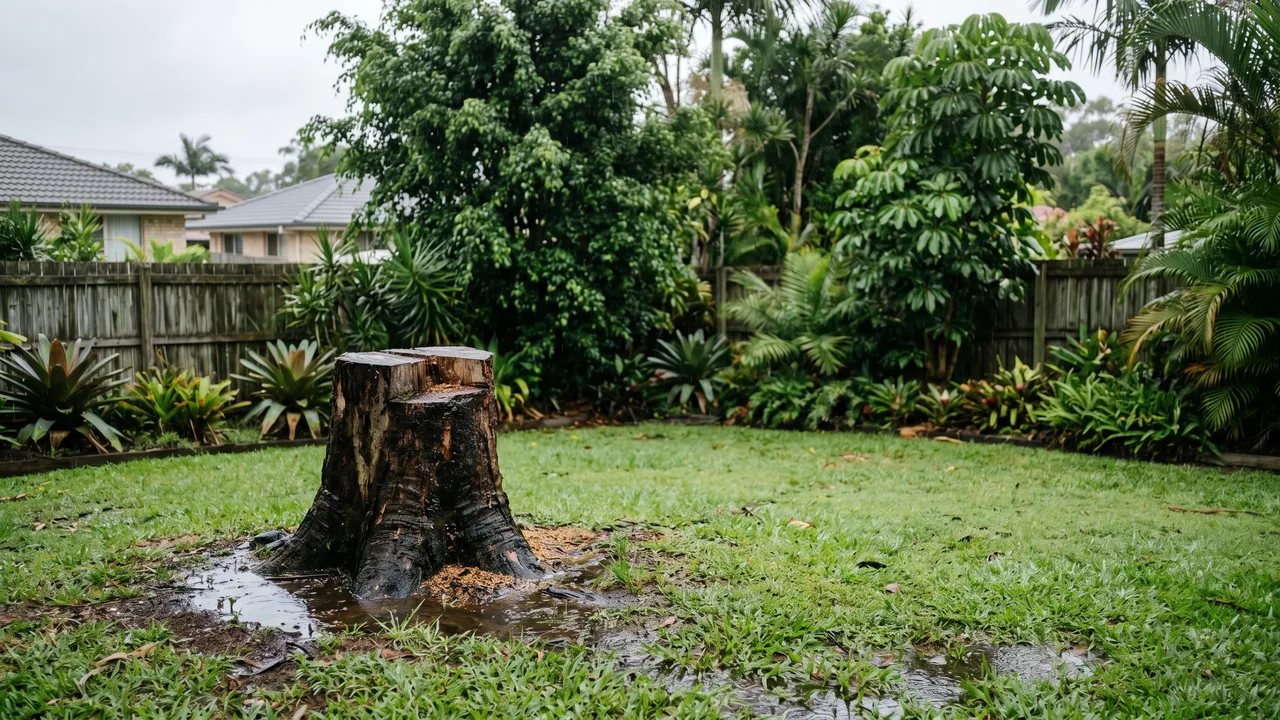
Wet season conditions bring saturated ground, especially across the Inner West suburbs like Chelmer, Graceville, and Sherwood where clay-heavy soils are common. When that clay is waterlogged, a stump grinder — which typically weighs between 300 and 700 kilograms depending on the machine — can leave deep ruts across a lawn. If your yard is already soft from three days of summer rain, grinding the stump itself is straightforward, but the machine's access path may not be. Repairing compacted, churned-up turf costs time and money.
Dry season conditions firm up the soil, which means cleaner machine movement, less surface damage, and often a faster job. From around May through to September, most residential yards in the Chelmer and Indooroopilly area are workable within 24 hours of any rainfall, rather than needing several dry days to recover first.
There is also the simple matter of booking pressure. Wet season storms regularly knock trees over across Brisbane, and when a tree falls, the stump usually follows soon after. That post-storm surge means grinders are in high demand from December through February. Lead times get longer and, with some operators, prices reflect that demand. If your stump is not an emergency, waiting until autumn can make practical sense.
What the Tree Species Does to the Equation
Timing is not just about weather. The biological state of the stump changes depending on when the tree was felled, and that affects how hard the grinding will be.
A stump that has been in the ground for twelve months or more has typically started to decay, especially in Brisbane's humid conditions. Softer, partially composted wood grinds faster than a freshly cut stump of the same diameter. If you felled a large fig, camphor laurel, or poinciana in summer and you are in no rush to replant, waiting until the following autumn dry season gives you both better ground conditions and a somewhat softer stump — a double benefit.
On the other hand, if your tree was removed as part of a storm response or an urgent council compliance job, the stump will be green and dense. That is not a reason to delay grinding, just a reason to be realistic about the time and cost involved. Green stumps of species like camphor laurel (a common street and yard tree across Moorooka, Yeronga, and Fairfield) are notably hard to grind quickly because the wood is dense even in good conditions.
Regrowth: A Specific Reason Timing Matters for Certain Species
Some trees found across Inner West Brisbane will actively resprout from a stump if you do not grind promptly. Camphor laurel is the most obvious example — it is an invasive species in Queensland and a single stump left untreated can push out dozens of new shoots within weeks, particularly in warm, wet conditions. Coral trees and ficus species can do similar things.
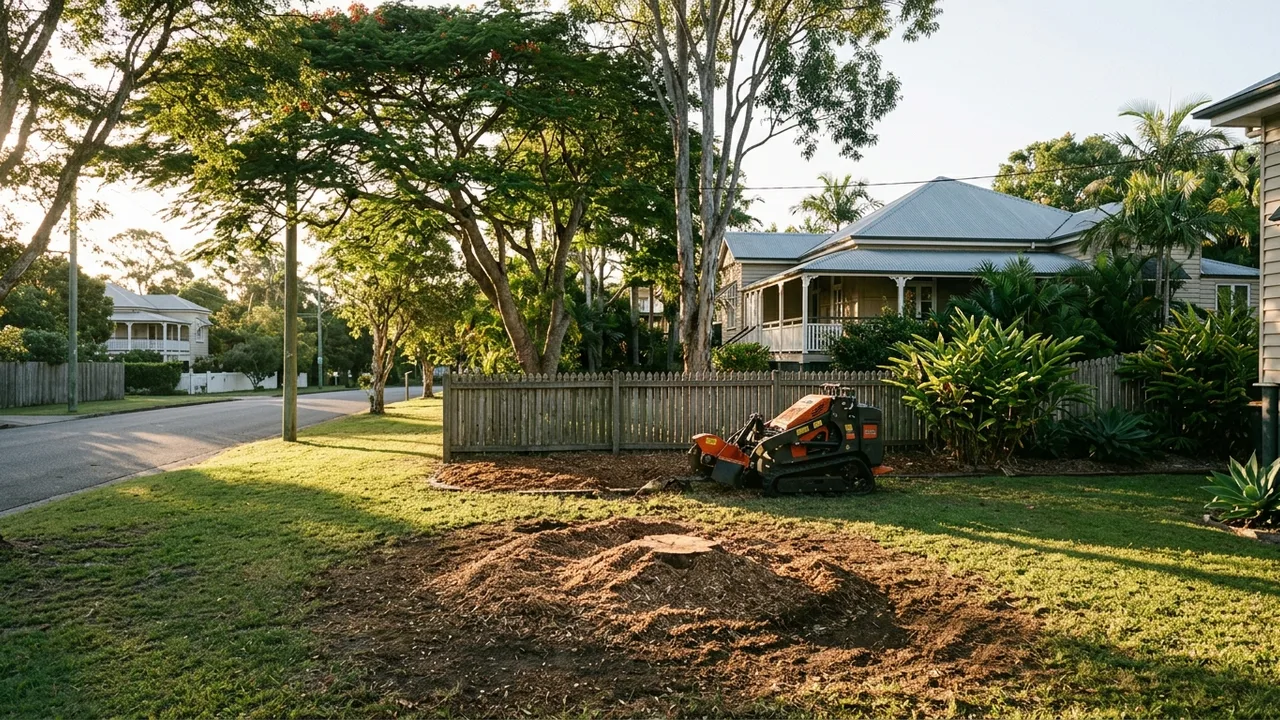
For these species, late summer or early autumn grinding is actually a strategic choice. Grinding just as the wet season winds down removes the stump before the coming cooler months, when regrowth slows. Combine the grind with a proper below-ground removal (what we call a root system removal for stumps with active lateral roots threatening paths or garden beds) and you significantly reduce the chance of persistent regrowth.
By contrast, species like jacaranda or mango typically do not resprout aggressively once the main trunk is removed, so timing is less critical from a biological standpoint.
Practical Trade-offs: Waiting vs Acting Now
Here is where people often get stuck. The logic of "wait for dry conditions" makes sense in theory, but it needs to sit alongside some real-world trade-offs.
Cost of waiting:
- Regrowth risk on invasive species.
- Trip hazards from exposed roots or uneven ground, which matter more if you have young children or elderly family using the yard.
- Landscaping or construction delays if the stump is blocking a planned garden bed, path, or driveway.
- Longer lead times if you wait until post-storm season when demand peaks again.
Benefit of waiting:
- Firmer ground, less lawn damage.
- Potentially softer stump from partial decay.
- Easier scheduling and sometimes slightly better pricing outside the December-February peak.
A reasonable rule of thumb: if the stump is a safety issue, is actively resprouting, or is blocking progress on a garden or build project, grind it now regardless of season. If you have genuine flexibility and the stump is simply sitting there with no urgency, booking in April through June gives you close to ideal conditions across most properties we work on in the Chelmer, Corinda, and Taringa area.
What About Mulch, Replanting, and Follow-On Work?
One underrated reason to think about timing: what you plan to do with the area after grinding.
If you want to lay turf directly over the grinding site, the ground needs time to settle and the woody mulch from the grind needs to either be removed or given several months to break down. Turf laid too quickly over undecomposed wood chips will typically produce patchy, uneven results. If you opt for our mulch clean and haul service (where we remove and dispose of the grindings off-site), you can replant much sooner. That is worth factoring into your budget.
Autumn is genuinely the best time to establish new turf in Brisbane. Temperatures are dropping from summer highs, rain is less intense, and cool-season and warm-season grasses both establish well through April to June. So if you want to grind and immediately replant, timing the whole job for March to April — after the wet season, before the cooler nights — makes real practical sense.
For garden bed preparation specifically, the soil temperature through autumn and winter remains warm enough for most subtropical plantings, and the reduced evaporation rate means you can establish new plants without the watering burden you face in a Brisbane summer.
A Straightforward Closing Take
You do not need to overthink this. If something is urgent, deal with it. If it is not, and you want to minimise lawn damage and maximise how quickly you can replant, plan for autumn. April and May are probably the most practical window in Brisbane for non-urgent grinding jobs.
Whatever season you are in, the most useful step is to have someone look at the specific stump, soil conditions, and what you plan to do with the space afterward. That is where the real advice lives, not in a general seasonal guide.
If you are in Chelmer, Indooroopilly, Graceville, Sherwood, or any of the surrounding suburbs, we are happy to take a look and give you a straight quote. No pressure, just a clear picture of what the job involves and when it makes sense to do it.
Quick answers