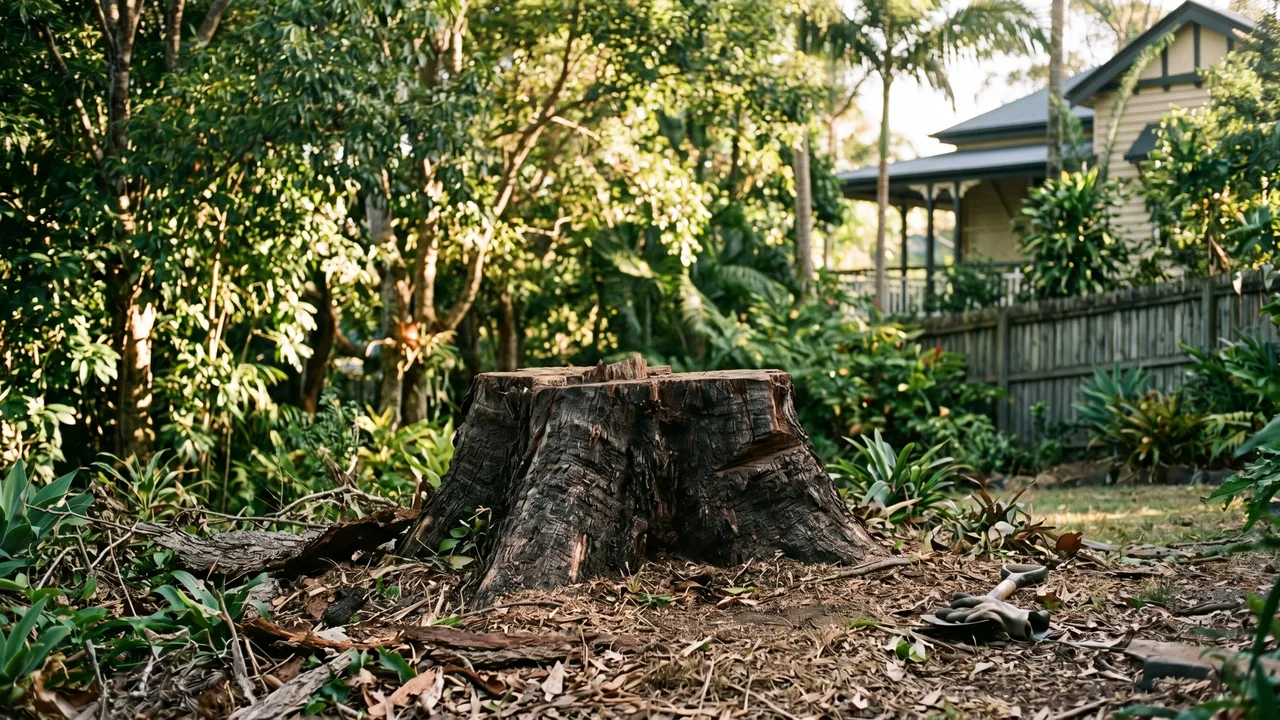
Stump Grinding guide
Which Tree Species Leave the Hardest Stumps to Grind in the Chelmer Area?
The Short Answer
The hardest stumps to grind in the Chelmer area are typically camphor laurel, Queensland brush box, and tallowwood. These species produce dense, interlocked timber with high silica or resin content that dulls grinding teeth quickly and adds significant time to any job. If you have one of these in your yard, expect the job to cost and take more than you might assume from a rough quote.
Why Timber Density Matters for Stump Grinding
A stump grinder works by spinning a toothed carbide wheel across the stump face, chipping away material in passes. Soft timber like jacaranda or lilly pilly breaks apart quickly. Dense timber resists the teeth, generates more heat, and can cause the operator to replace or sharpen carbide tips mid-job.
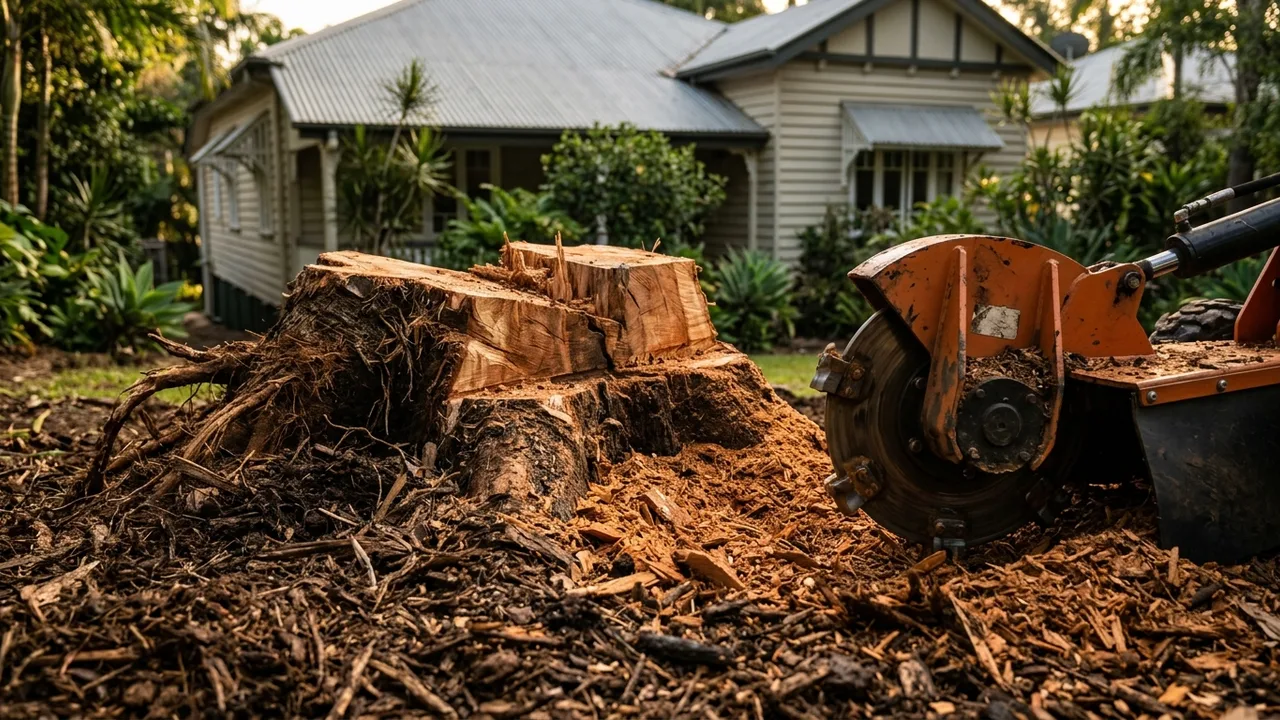
There are a few factors that make a stump genuinely difficult:
- Timber density (Janka hardness). Higher-rated timbers like brush box sit well above 10 kN on the Janka scale. The wheel has to work harder for each millimetre of progress.
- Root spread and depth. A wide, shallow root plate takes more passes than a deep taproot. Brisbane's clay-heavy soils in suburbs like Chelmer, Sherwood, and Graceville often spread roots laterally rather than deep, which widens the grinding area.
- Resin or silica content. Camphor laurel contains volatile oils; brush box and ironbark contain silica. Both accelerate wear on carbide teeth.
- Stump age and condition. A freshly cut stump is harder than one that has sat for a year or two. Decay softens fibres, which is one reason some operators prefer to wait if time allows.
Understanding these factors helps you ask better questions when you get a quote.
The Species Most Likely to Challenge a Grinder in This Area
Chelmer, Indooroopilly, St Lucia, and the surrounding Inner West suburbs have a mix of old garden trees and remnant bush species. Here are the ones we see most often that push the grinder harder.
Camphor Laurel (Cinnamomum camphora) This tree is everywhere in Inner West Brisbane, particularly in older Queenslander-era gardens. It is a declared Class 3 invasive species in Queensland, but it was widely planted decades ago and many mature specimens remain on private land. The timber is moderately hard and very resinous. The oils coat the grinding teeth and can cause slipping rather than cutting. Camphor laurel also produces a wide, buttressed root flare that adds to the horizontal grinding area.
Queensland Brush Box (Lophostemon confertus) Brush box is native to southeast Queensland and commonly planted as a street tree. Several streets across Sherwood, Corinda, and Moorooka have ageing brush box specimens that eventually come down, leaving stumps with exceptional hardness. This is one of the slowest species to grind through. Expect the job to run longer and, on larger stumps, require more carbide tip changes than average.
Tallowwood (Eucalyptus microcorys) Less common in home gardens but present in the area, tallowwood is one of the hardest Australian eucalypts. The oily timber resists wear and blunts teeth in a similar way to camphor laurel. Any eucalypt with visible interlocked grain will slow the grinder, but tallowwood and grey ironbark are the worst offenders if you happen to have either on your property.
Bunya Pine (Araucaria bidwillii) Bunya pines are iconic in Inner West Brisbane, particularly around older homes in Chelmer and Graceville. The timber itself is not the hardest, but the root system is the problem. Bunya roots are extremely thick, radiate widely, and can extend under paths and driveways. A full root system removal (deep grinding to deal with lateral roots threatening hard surfaces) on a bunya stump is a significant job.
Jacaranda (Jacaranda mimosifolia) Worth including here for balance, because jacaranda is the tree most people in the area will recognise. Despite being prolific, jacaranda is actually one of the easier species to grind. Relatively soft timber, moderate root spread. If you have a jacaranda stump, you are in the easier category. The pollen, however, is a separate problem.
How Stump Age and Soil Type Change the Calculation
A freshly cut stump is measurably harder to grind than the same stump after 12-18 months of natural decay. If there is no urgency, letting a camphor laurel or brush box stump sit for a season can reduce the grinding time and cost. That said, some species (camphor laurel in particular) are slow to decay due to their natural antimicrobial oils. Waiting does not help much with camphor.
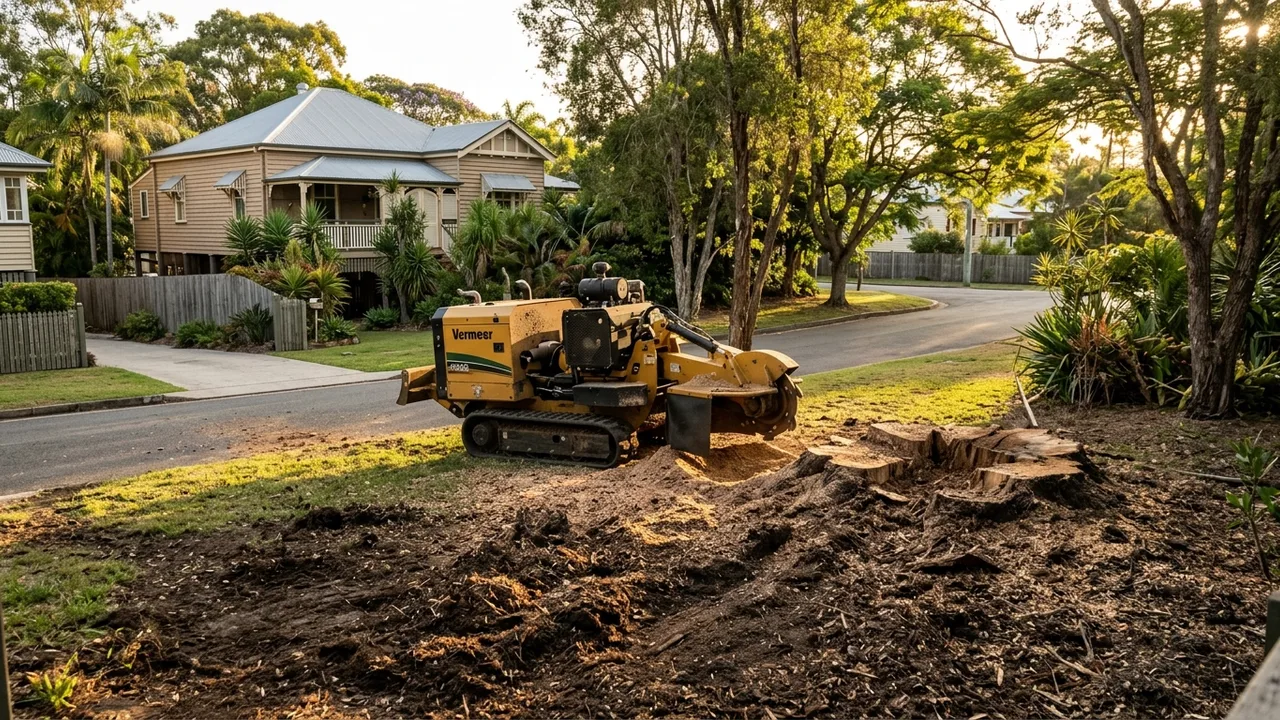
Brisbane's Inner West soil is predominantly clay-based, particularly in lower-lying areas near the river such as Chelmer, Corinda, and Yeronga. Clay holds moisture well, which accelerates root decay faster than the sandy soils you find closer to the bay. This is mildly good news for waiting out a hard stump; decay happens faster here than it would on a drier ridge.
Soil type also affects how root systems travel. In clay, roots tend to spread horizontally searching for oxygen, which means the grinding footprint is often wider than the visible stump diameter. When you ask for a quote, a good operator will inspect the root flare and soil type, not just measure the stump at the collar.
Cost and Time Trade-offs for Hard Stumps
Our jobs across the Chelmer cluster typically range from $200 for a small, accessible softwood stump to around $1,000 for a large, hard-species stump with significant root work. Hard species sit toward the upper end of that range, and there are a few honest reasons for that.
- Carbide tip consumption. Tips on the grinding wheel wear faster and may need replacing mid-job. That cost gets factored in.
- Time on site. A camphor laurel stump that takes three hours costs more in labour than a jacaranda that takes forty minutes.
- Depth requirements. If you want the site ready for turf or a garden bed, the grind needs to go below surface level, typically 150-300mm depending on use. Hard species take longer to reach that depth.
One genuine trade-off to consider: if you have multiple stumps across the same property, booking a multi-stump package in one visit almost always reduces the per-stump cost, even if one of the stumps is a difficult species. The machine is already on site; mobilisation cost is shared.
What to Tell Your Operator Before the Job
A few pieces of information make a real difference to the accuracy of a quote and the smoothness of the job.
- Species, if you know it. Even a rough ID (eucalypt, pine, ornamental deciduous) helps estimate grinding time.
- When the tree was cut. A stump removed last week is harder work than one removed two years ago.
- Whether roots are near any services. Gas, stormwater, NBN conduit, and irrigation lines are all common in Inner West residential properties. If you have had new service runs installed, flag it.
- Access constraints. Many properties in Chelmer, Taringa, and Indooroopilly have narrow side gates, steep slopes, or raised Queenslander foundations that limit which machine can reach the stump.
Being upfront about these details protects you from a quote that balloons on the day.
A Practical Closing Thought
If you have a camphor laurel, brush box, or bunya pine stump in your yard, you are dealing with some of the harder work in residential stump grinding. That is not a reason to panic or to accept the first quote without question; it is just worth knowing before you budget. Ask any operator which species they think it is, what machine they plan to use, and how they handle carbide wear on tough timber. A straightforward answer to those three questions tells you a lot about their experience.
If you want to talk through what you have and get an honest estimate for the work, give us a call. We cover Chelmer and the surrounding suburbs and are used to dealing with the older, harder trees that come with Inner West Brisbane property.
Quick answers