Stump Grinding guide
What Actually Drives the Cost of Stump Grinding in Brisbane?
What Actually Drives the Cost of Stump Grinding in Brisbane?
The short answer: stump diameter, soil conditions, and access. Those three factors explain the bulk of every quote you'll get in Brisbane. Everything else, including the number of stumps, root complexity, and whether you want the mulch taken away, adds to or adjusts that baseline.
If you've already rung around and found quotes ranging from $150 to $600 for what looks like "the same job", this article explains why that gap exists and what you're actually comparing.
Stump Size Is the Starting Point, but It's Not the Whole Story
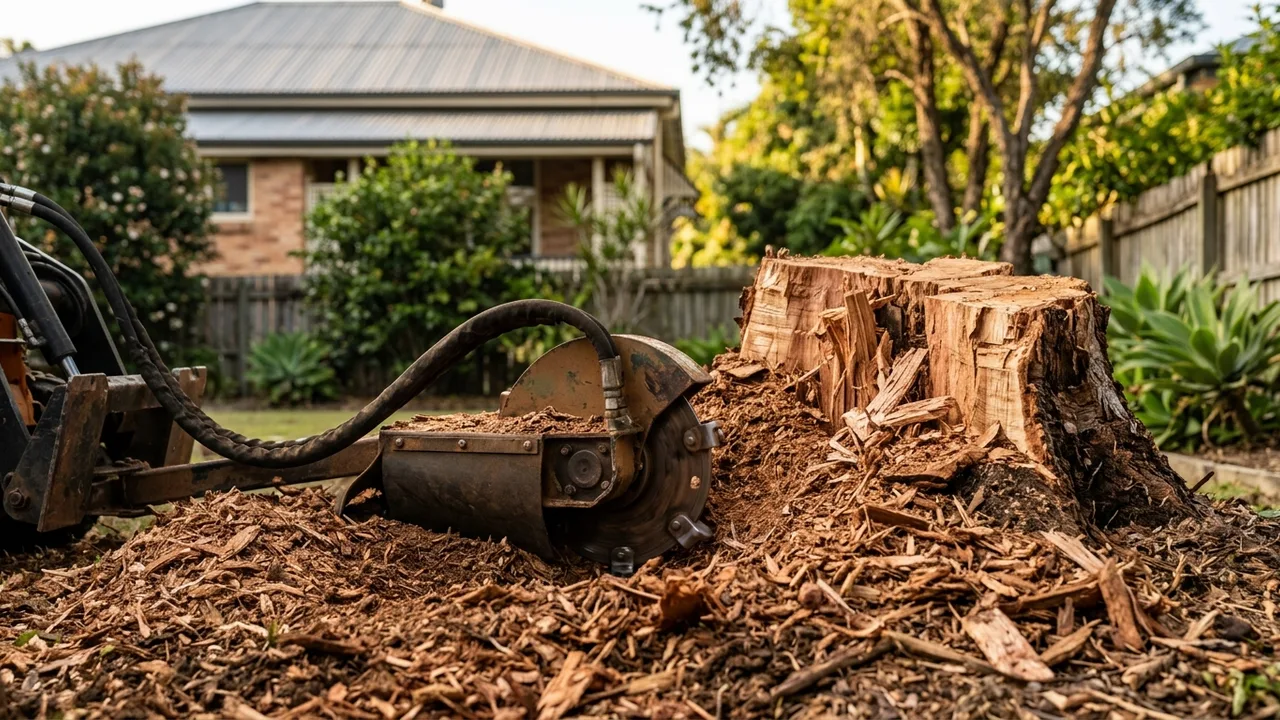
Most operators, including us, price primarily on the diameter of the stump at ground level. It's the most honest proxy for machine time. A 200 mm camphor laurel stump takes a fraction of the time that a 600 mm silky oak does, even if both are sitting in flat, clear lawn.
As a rule of thumb for Brisbane jobs, you're typically looking at:
- Small stumps (under 200 mm diameter): $150 to $250
- Medium stumps (200 to 400 mm): $250 to $450
- Large stumps (400 to 600 mm+): $450 to $800 or more
Those ranges shift based on the other factors below. Don't treat them as fixed prices, treat them as a starting frame.
One thing worth knowing: species matters more than people expect. Hardwood stumps like brushbox, ironbark, or tallowwood are significantly denser than softwoods or ornamental species. A 300 mm brushbox stump can take longer to grind than a 400 mm ornamental frangipani. If you're getting quotes, mention the species if you know it.
Access Is Where Brisbane Properties Get Complicated
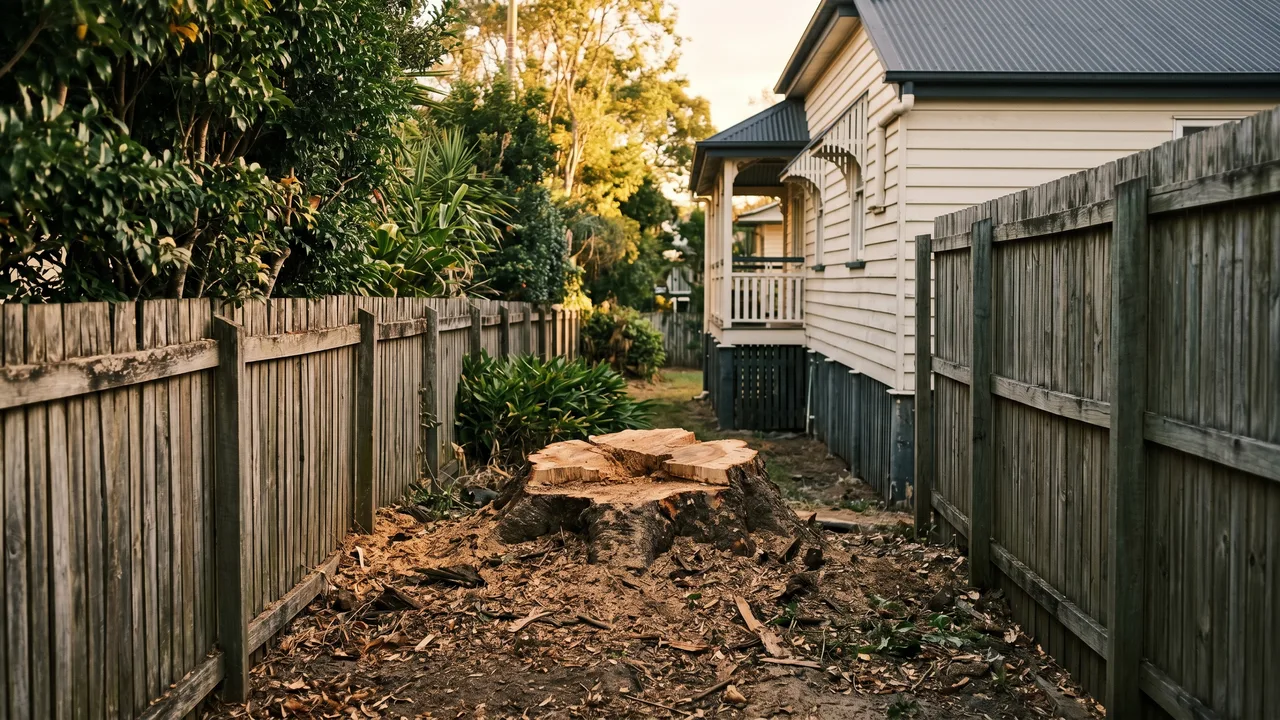
Chelmer, Indooroopilly, Sherwood, and a lot of the Inner West are full of Queenslander homes with narrow side gates, sloping blocks, and mature gardens that have been growing unchecked for decades. That creates real access problems for machinery.
A standard walk-behind stump grinder needs roughly 900 mm of gate clearance to get through. If your stump is at the back of a narrow block and the machine can't pass the side gate, the operator has two options: use a smaller hand-unit (which takes longer), or take a longer route through a neighbours property (which usually isn't an option). Both scenarios add time and cost.
Sloping blocks are another factor specific to this part of Brisbane. Steep gradients affect machine stability and slow the process down. If you're in Taringa, Yeronga, or Moorooka on a hillside block, expect that to come up in any honest quote.
Overhead powerlines or buried services also change the job. Root system removal near underground pipes or near NBN conduits requires slower, more deliberate work. In older suburbs like Graceville and Corinda, the underground infrastructure is often not where the plans say it is. That's worth disclosing upfront so operators can factor it in rather than discover it mid-job.
The Root System Question: Grinding vs Extraction
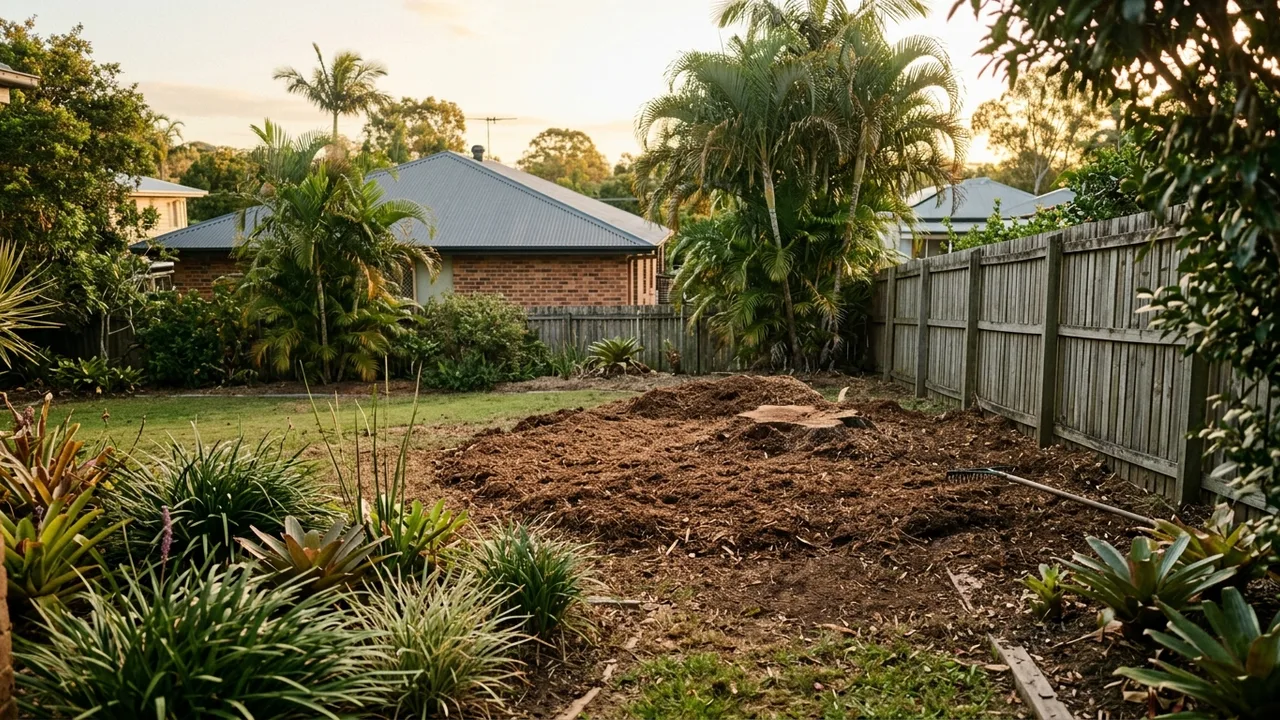
Standard stump grinding removes the stump to below-ground level, typically 150 to 300 mm deep, and leaves the lateral roots to break down naturally over time. For most garden bed and lawn applications, that's perfectly adequate. Roots that aren't connected to a living stump stop growing and break down within a year or two.
The situation changes when roots are actively damaging something: a driveway, a path, a retaining wall, or a drain. In those cases, grinding the stump alone doesn't solve the problem. You need targeted root extraction, which means deeper machine work along the root run, and sometimes hand digging to expose and cut lateral roots before they crack anything further.
Root system removal costs more because it takes longer and may require a second pass with smaller equipment. Whether it's worth it depends on what the root is threatening. A root under lawn is low priority. A root under a 15-year-old concrete driveway is a different conversation entirely.
If you're unsure, ask the operator to inspect before quoting. We include a look at the root run in our standard site visit for this reason.
Multiple Stumps: Where the Numbers Start to Work in Your Favour
If you have more than one stump, bundling them into a single visit makes financial sense. The machine is already on site, the operator is already there, and the setup cost (travel, equipment loading, site inspection) is shared across all the stumps rather than charged per job.
Our multi-stump package covers two or more stumps on the same property in a single visit at a discounted rate. The saving varies depending on the stumps involved, but it's typically more cost-effective than booking separate single-grind visits weeks apart.
If you're doing a garden renovation and you know you'll eventually want multiple stumps out, it's worth doing them together rather than in stages. The only exception is if one stump is inaccessible right now (say, a fence needs to move first), in which case sequencing them makes sense regardless.
Mulch Removal: Included or Extra?
Stump grinding produces a lot of material. A medium-sized stump can generate enough woody mulch to fill two to three wheelie bins. What happens to that material varies between operators and significantly affects your final cost.
Some operators leave the grindings in the hole, which is fine if you're replanting and want the organic matter, or if you're happy to rake it out yourself. Others offer removal as a separate service. We offer mulch clean and haul as an add-on: full removal and off-site disposal of all grindings and surface debris after the grind is complete.
If you're planning to turf over the area, you'll want the hole topped up with soil and the mulch removed. If you're creating a garden bed, the grindings can often be incorporated. Talk through what you're doing with the space and let the operator quote accordingly.
Emergency Grinding: What Drives the Premium
After a storm, a fallen tree often leaves behind a stump that's blocking access, sitting on a driveway, or creating a hazard that needs urgent resolution. Emergency call-outs carry a premium for straightforward reasons: the operator is reorganising their schedule, potentially working outside normal hours, and prioritising your job over existing bookings.
Brisbane's storm season runs roughly November through March, and the Inner West gets its share of events in those months. If you need priority response after storm tree removal, expect to pay more than the standard rate for the same size stump. Exactly how much more depends on timing and how complex the job is, but a 30 to 50% premium over standard pricing is a reasonable expectation.
If the situation isn't genuinely urgent, waiting for a standard booking slot will save you money. But if the stump is blocking vehicle access or creating a safety issue, the premium is usually worth it.
How to Get a Quote That Actually Reflects the Job
The most useful thing you can do before getting a quote is measure the stump diameter at ground level and take two or three photos: one from above showing the full stump, one showing the access path (gate or side passage), and one showing any nearby structures, paths, or planted areas.
Send those through with your address and a brief note about what you want done with the site afterwards (turf, garden bed, paving, etc.). That gives any operator enough to provide a reasonably accurate quote without a site visit, or to flag the situations where they do need to come and look.
For larger jobs or anything involving root removal near infrastructure, an on-site quote is the better option. It protects you from scope creep and protects the operator from underquoting.
We cover Chelmer, Indooroopilly, Taringa, St Lucia, Graceville, Sherwood, Corinda, Yeronga, Fairfield, and Moorooka. If you'd like a quote, send through your details and those photos and we'll give you a straight answer on what the job involves and what it's likely to cost.
Quick answers