Stump Grinding guide
Do You Need Council Approval to Remove and Grind a Stump in Brisbane?
Do You Need Council Approval to Remove and Grind a Stump in Brisbane?
For most stumps, no. Once a tree has already been removed, grinding the leftover stump is generally not a regulated activity under Brisbane City Council rules. But there are exceptions worth knowing before you book anyone.
The short answer holds for the vast majority of suburban yards in Chelmer, Indooroopilly, Graceville, and the surrounding Inner West. Where things get complicated is when the original tree removal required approval, or when the stump sits near a protected area. Here is what you actually need to know.
When Stump Grinding Needs No Approval
If you removed a tree legally, either because it was exempt from Council approval or because you already obtained a permit for the removal, grinding the stump is almost always a straightforward next step. Council regulates tree removal, not stump grinding as a separate activity in most cases.
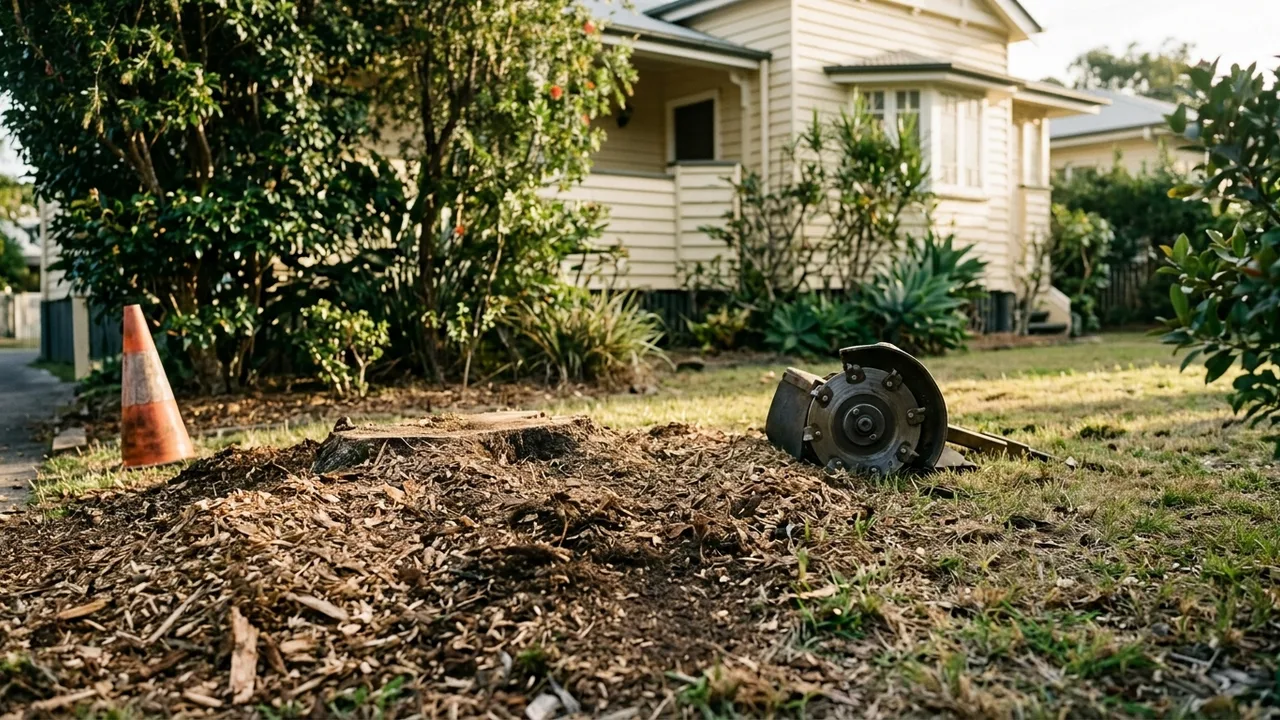
Brisbane City Council's vegetation management rules focus on living, measurable trees. A stump is typically the remnant of a tree that already came down. There is no permit category called "stump grinding permit" in the BCC framework, as a rule of thumb.
Common situations where you can grind without any approval:
- You removed a small tree legally under the exempt category (generally trees under certain height and trunk diameter thresholds).
- The tree fell in a storm and was already an approved emergency removal.
- The stump is from a tree that was cleared during an approved building or landscaping project.
- The tree was not listed as significant or protected under any overlay.
If you are in any doubt about your original removal, check your BCC Development Online (the online planning portal) or call Council directly on 07 3403 8888.
Where Approval Might Still Apply
There are situations where stump grinding can sit inside a broader approval condition. Worth checking these if any of them sound familiar.
Significant trees. Brisbane's Significant Tree Register lists individual trees of heritage or ecological value. If your tree was on that register and its removal was subject to conditions, those conditions may specify how the site is to be managed afterwards, including whether stumps and roots need to stay or be removed in a particular way.
Vegetation overlays. Properties in the Inner West that back onto creek corridors, for example along Oxley Creek or the Brisbane River tributaries running through Corinda and Sherwood, can fall under Waterway Corridors or Biodiversity overlays. In those cases, any ground disturbance, including deep root grinding, may be subject to conditions. A stump near the top of a creek bank is worth double-checking.
Pre-1947 Streetscape Overlays. Parts of Chelmer, Graceville, and surrounding suburbs have streetscape overlays applying to trees in the front yard or on the nature strip. If the stump sits in the nature strip specifically, that is Council land, and you need Council consent before anyone touches it, full stop.
Easements and shared boundaries. If the stump sits within a drainage easement or right of way, grinding into the root system at depth could implicate infrastructure. That is less a planning issue and more a practical liability one.
What About Nature Strip Stumps?
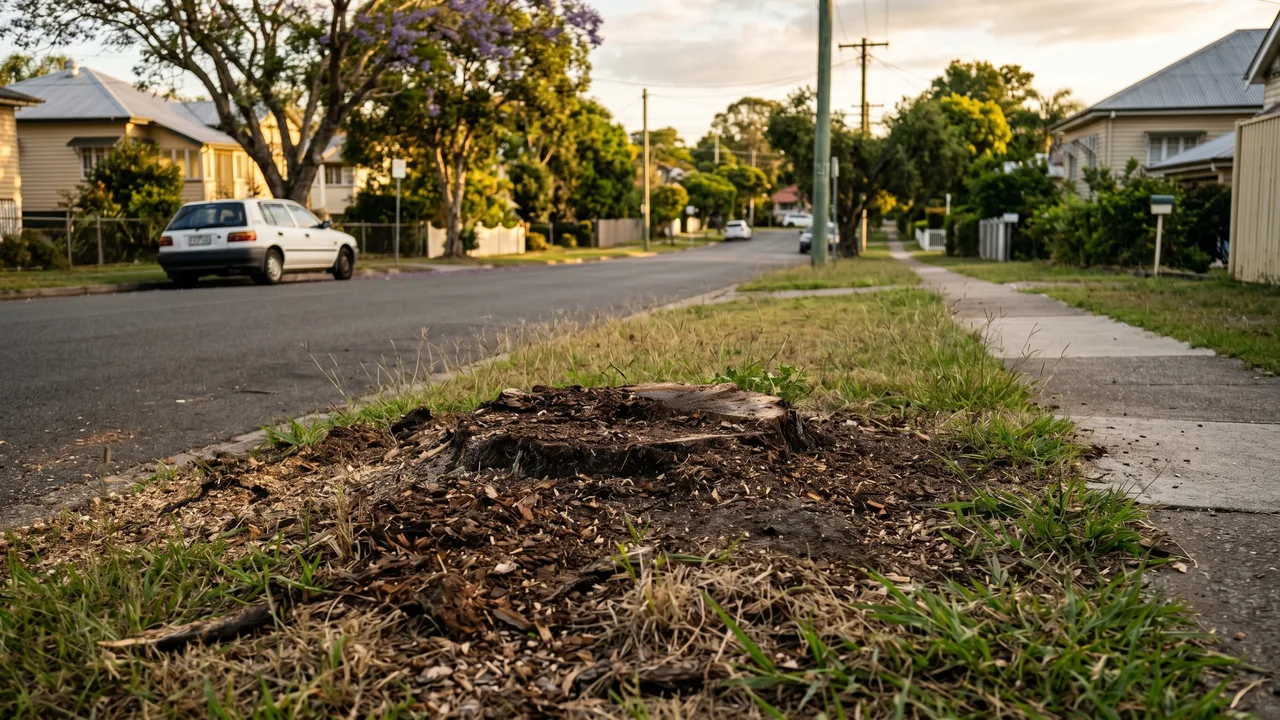
This is the one area where homeowners most often get caught out. The nature strip between your fence and the kerb belongs to Council, not you. If there is a stump there from a street tree that Council removed (or approved your neighbour to remove), grinding it requires specific Council permission.
In practice, Council often grinds these stumps through their own maintenance crews, particularly after storm work. If they have not done it yet and it is creating a hazard, you can lodge a request through BCC's online service requests portal.
Do not hire a private contractor to grind a nature strip stump and assume it is fine. Even if the work is harmless, you could face a bill from Council or a request to restore the verge. A quick call saves a lot of trouble.
The Cost Side: Approval vs Just Getting On With It
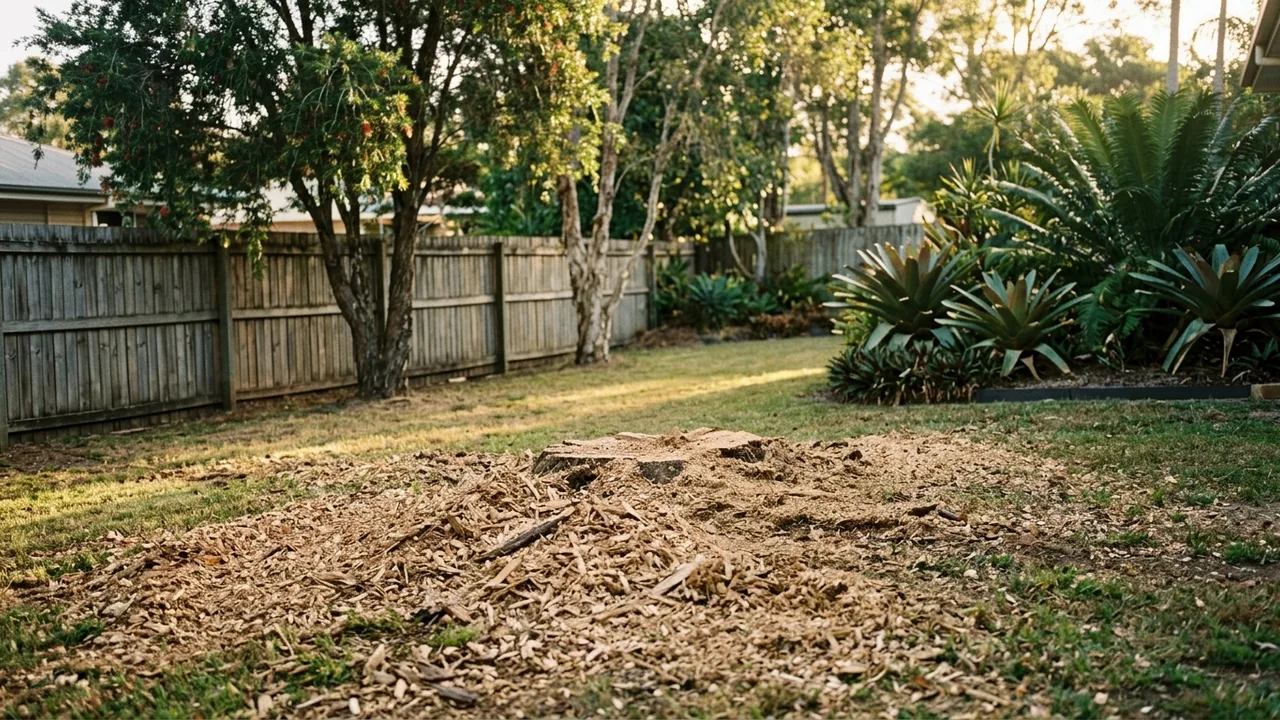
Let's be direct here. For a back yard stump on a standard residential lot in Taringa, St Lucia, or Moorooka, you are very unlikely to need any approval. Most stump grinding jobs in this part of Brisbane are straightforward and require nothing more than giving your neighbours a heads up about noise.
Typical grinding costs for a single stump in our area run somewhere between $200 and $500 depending on stump diameter and access. Multiple stumps on the same visit come in cheaper per stump. Root system work, where we grind out surface roots that have buckled a path or lifted a garden edge, adds time but is usually quoted on the day.
If you do find yourself in a situation where an overlay applies and you need a development application, the cost and time involved is significant compared to the grinding itself. A straightforward DA to remove a regulated tree can take weeks and cost several hundred dollars in lodgement fees before any groundwork starts. That is a good reason to check your planning overlays early, not after someone has already started cutting.
You can check your property's overlays for free using BCC's City Plan Interactive Mapping tool. Search your address and look at the vegetation management and overlay layers. It takes about five minutes and could save a genuinely awkward conversation.
Practical Steps Before You Book
Here is a sensible order of operations if you are unsure:
- Check whether the original tree removal was approved or exempt. If you have paperwork from a previous permit, read the conditions.
- Look up your property on BCC's City Plan mapping. Specifically check for significant trees, vegetation overlays, and heritage overlays.
- Confirm the stump is on your property, not the nature strip. The boundary is usually at the inside of the footpath or kerb, but survey pegs are the only reliable way to know.
- If nothing flags up, you are most likely fine to proceed. Book your grinding, get a written quote, and confirm what the contractor will do with the chip spoil.
- If something does flag up, call Council first. They are not always as difficult to deal with as people expect, and a quick phone conversation can clarify everything.
We cover Chelmer, Indooroopilly, Taringa, St Lucia, Graceville, Sherwood, Corinda, Yeronga, Fairfield, and Moorooka, and we are used to working on all sorts of properties across these suburbs. Some have creek setbacks, some are full of older Queenslander-era poinciana and fig stumps with enormous root plates, and some are straightforward flat-block jobs. We can tell you on-site whether we see anything worth flagging before we start the machine.
Closing Thought
Stump grinding is one of the lower-risk yard jobs from a regulatory standpoint. The vast majority of residential stumps in Brisbane's Inner West can be ground without any paperwork. The exceptions are real but easy to identify if you spend a few minutes with the City Plan map and a quick check of your original removal paperwork.
If you have already done that check and everything looks clear, there is not much more to deliberate. Get a quote that includes chip cleanup, ask whether root work is priced in if you have surface roots lifting your paths, and make sure whoever you hire carries public liability insurance. Those three things matter more, practically speaking, than the planning question for most jobs.
If you would like us to take a look and quote the job, we are happy to walk the site with you and give an honest read on what is involved before anything is booked.
Quick answers