Stump Grinding guide
Can You Grind a Stump Yourself, or Should You Call a Pro?
Can You Grind a Stump Yourself, or Should You Call a Pro?
Yes, you can hire a stump grinder and do it yourself. But for most Brisbane homeowners, it ends up being more work, more risk, and not much cheaper than calling someone who does it every day. Here is an honest breakdown of what each option actually involves.
What Stump Grinding Actually Involves
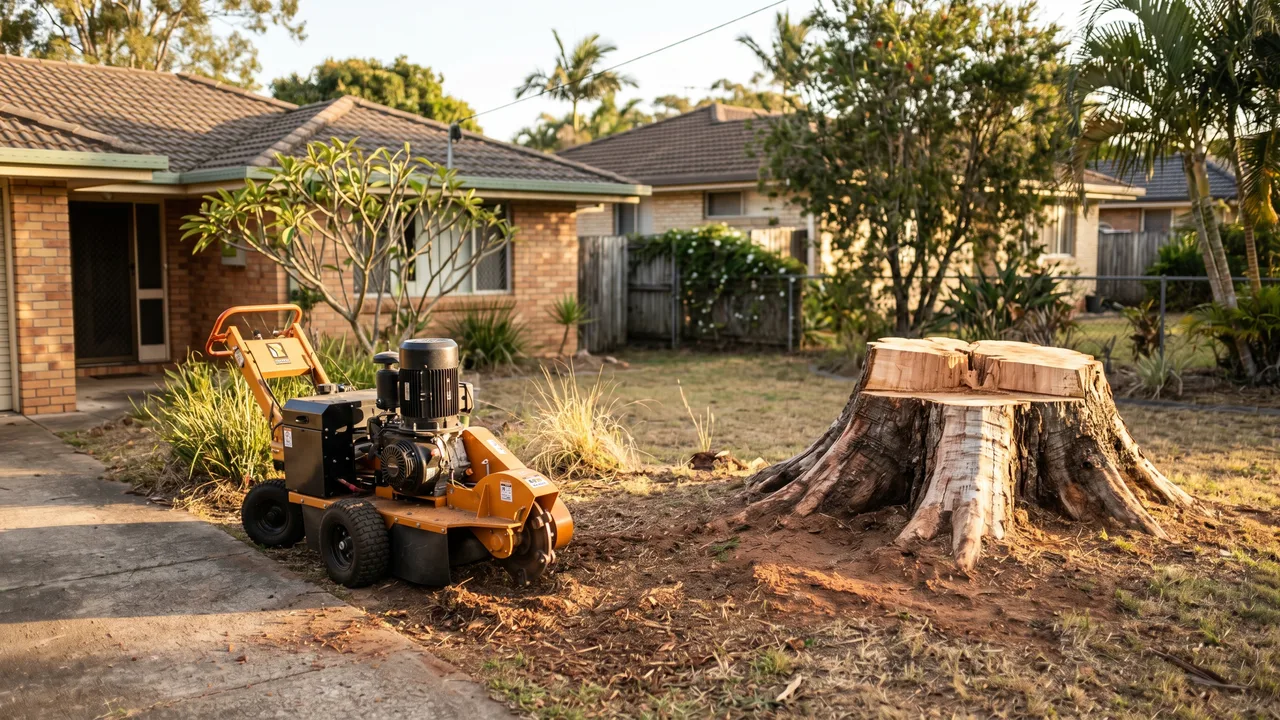
A stump grinder is a petrol-powered machine with a spinning carbide-tipped wheel. You lower it onto the stump and work it back and forth, chewing the wood down in passes. A small stump might take 15 minutes. A mature poinciana or fig stump in an Inner West Brisbane backyard can take an hour or more, depending on how wide the root flare is and how hard the timber is.
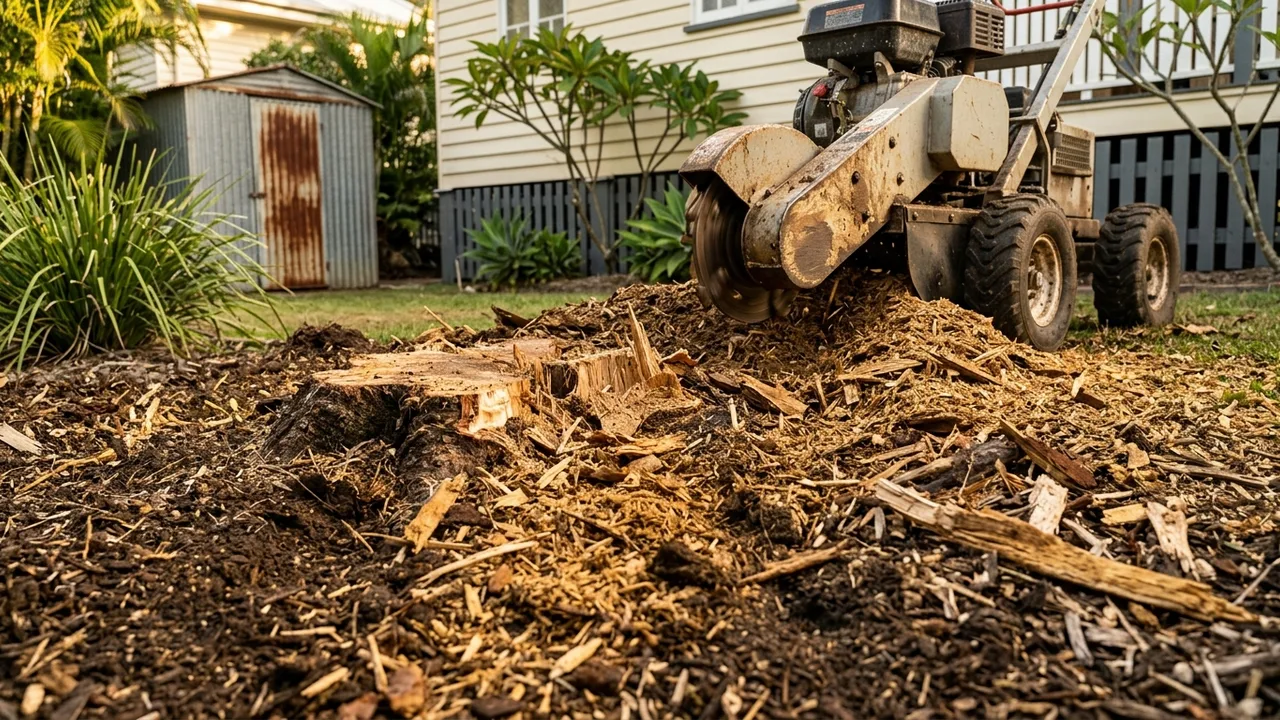
The machine does not just remove the stump above ground. To stop regrowth and let you plant or build over the spot, you typically need to grind to at least 150 to 200 mm below the soil surface. Some species, particularly figs and camphor laurels (which are common through Chelmer, Graceville, and Sherwood), have aggressive root systems that spread well beyond the trunk base. Getting those roots is a separate task, and a standard hire grinder may not have enough cutting depth or reach.
The spoil left behind is a mix of wood chips, soil, and sawdust. A medium stump produces more of this than most people expect, roughly a wheelbarrow or two. You will need to either barrow it out, use it as mulch, or arrange disposal.
The DIY Route: What It Costs and What It Demands
Stump grinder hire in Brisbane typically runs $200 to $350 per day, depending on machine size. You will also need to get it to your property, either by towing (if you have a trailer and a capable vehicle) or by paying a delivery surcharge.
Before you start the machine, you should:
- Call Dial Before You Dig (1100 or online) to check for underground services. This is not optional. Grinders have hit gas lines and irrigation pipes in suburban Brisbane yards.
- Clear the area of rocks and debris. A single rock can shatter carbide teeth, which costs more to replace.
- Check your local council rules. Some Brisbane City Council regulations around removal of trees, particularly protected or significant trees, may affect what you can legally do with the stump and roots.
On top of the hire fee, factor in your time: getting the machine, learning the controls, the physical work (stump grinding is fatiguing and loud), cleanup, and returning the machine. A full day job is realistic for someone without experience.
The honest trade-off: if you have one small stump, good access, a trailer, and you enjoy this kind of work, DIY is perfectly reasonable. If you have a large stump, a root system causing problems under paving, or a yard with tight access, the maths shift quickly.
The Pro Route: What You Get for the Money
Professional stump grinding in the Brisbane Inner West typically costs $200 to $600 for a single stump, though stumps from very large trees (mature figs, leopard trees, big brush box) can push higher depending on diameter, timber hardness, and access. We quote per job, not per hour, so you know the number before we start.
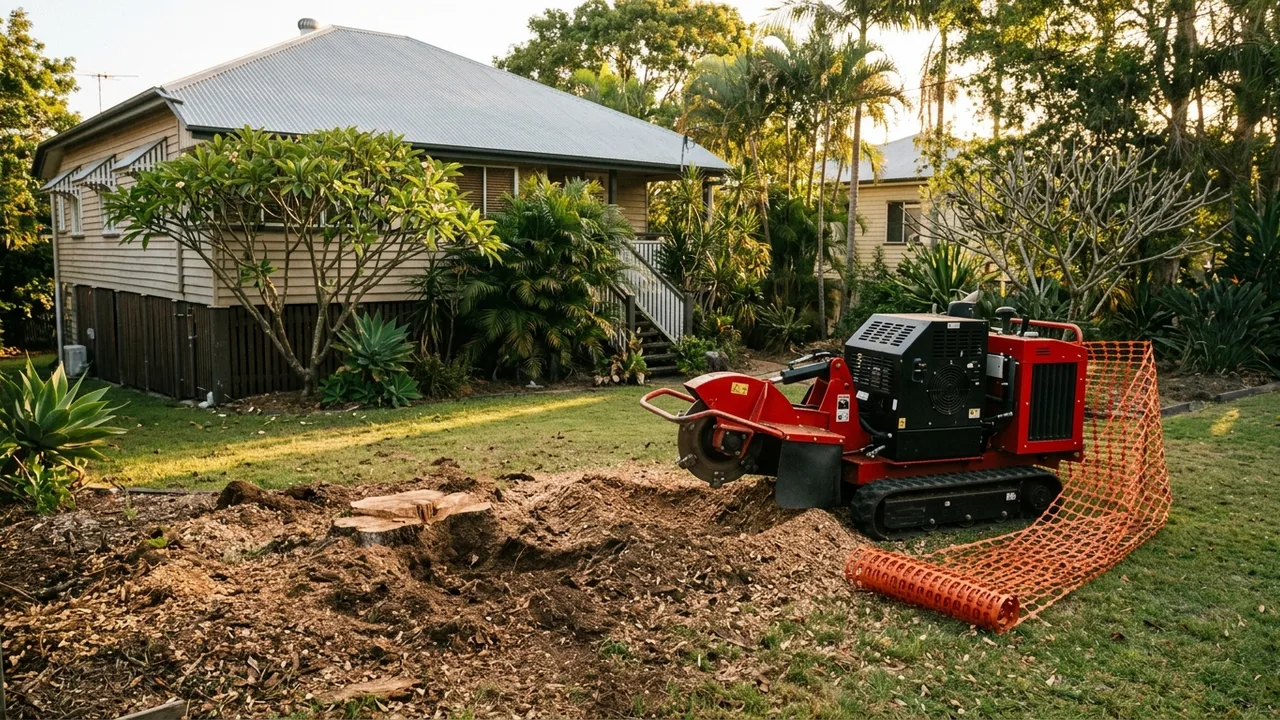
What you get beyond the grind itself:
- Machinery suited to the stump size, including larger drums that reach depth faster.
- Experience reading root systems, especially for species common in suburbs like Indooroopilly and St Lucia, where older Queenslander blocks often have remnant fig or camphor roots disrupting paths and garden beds.
- Chip and debris cleanup if you want it. We can leave the chips as mulch or remove them and backfill the void, ready for turf or planting.
- No delivery logistics, no trailer, no fuel run.
For multiple stumps on the same property, the per-stump cost drops. That is a practical reality: the mobilisation cost is shared, so if you have three or four stumps, a single visit costs noticeably less per stump than three separate visits.
Where Brisbane Conditions Complicate Things
The Inner West suburbs around the Brisbane River, including Chelmer, Graceville, Yeronga, and Corinda, have a particular mix of soil and root conditions worth knowing about.
The clay-heavy soils common in this area hold moisture, which keeps old root systems viable for longer than you might expect. A stump that looks dead on the surface can still have live root tips drawing nutrients. Species like the Moreton Bay fig, tuckeroo, and poinciana are known to regenerate from root segments if grinding is not deep enough.
Slopes also complicate things. Parts of Taringa, Indooroopilly, and Moorooka have significant grade changes in backyards. Getting a hire machine down a steep slope safely is genuinely hazardous, and some grinders are not designed for anything more than a gentle incline.
Overhead power lines are another factor. Chelmer and Sherwood in particular have older street trees near property boundaries, and branches or lines close to a stump work zone require awareness. We work around these regularly; a first-time operator might not think to check.
Species That Make Grinding Harder
Not all stumps are equal. A few that come up regularly in the Inner West:
- Camphor laurel - Dense, oily timber. Slower grinding, and the roots can be extensive. Common through Graceville and Sherwood.
- Moreton Bay fig - Surface roots that buckle footpaths and driveways. Grinding just the stump often leaves the root problem behind.
- Jacaranda - Softer timber, faster to grind, but the roots still need attention if they have crept under pavers.
- Poinciana - Broad stump base, hard outer ring. Takes time but manageable.
- Brushbox and tallowwood - Very hard timber. A small hire machine will struggle.
If you know what species you are dealing with, that changes the effort estimate significantly.
Making the Call: A Straightforward Recommendation
For a single small stump with easy access and no root complications, DIY hire is a legitimate option. Do your utility checks, take your time, and budget a full day.
For anything larger, anything involving surface roots disrupting paving or paths, multiple stumps, or a yard with access challenges, a professional visit will almost certainly save you money and effort when you add it all up honestly.
If you are in Chelmer, Graceville, Indooroopilly, Sherwood, Corinda, St Lucia, Taringa, Yeronga, Fairfield, or Moorooka and you want a straight quote before you decide, we are happy to take a look and give you a number with no pressure attached. Sometimes the quote makes the DIY option look better, and sometimes it tips the other way. Either way, you will know where you stand.
Quick answers