Stump Grinding guide
How Deep Does Stump Grinding Actually Need to Go?
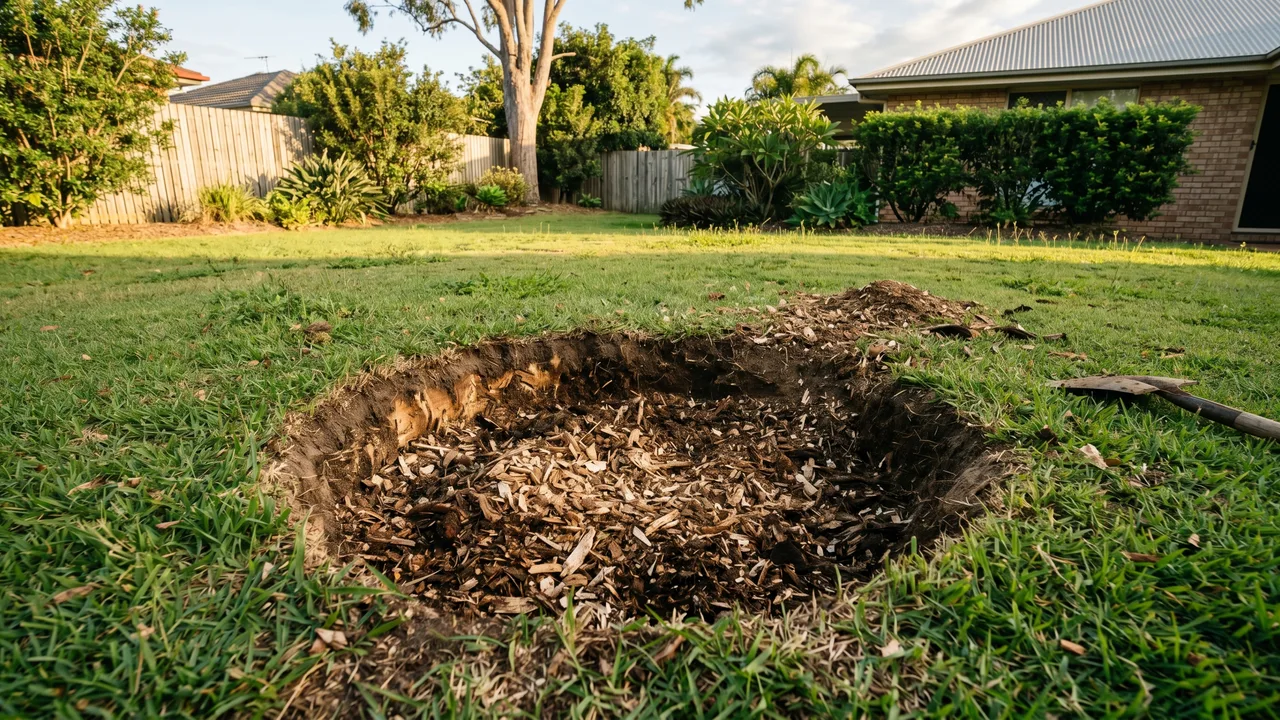
Most stump grinders cut to between 150 mm and 300 mm below the soil surface. That is deep enough to remove the bulk of the stump and let you turf, plant, or pave over the spot. Whether that depth is enough for your situation depends on what you plan to do next.
What "Below Ground Level" Actually Means
When a grinder operator talks about going below ground level, they mean below the surrounding soil surface, not below the original root collar. The cutting wheel chews the stump down in passes, working from the top down and from side to side. The machine leaves a pit filled with a mixture of wood chips and loose soil.
A standard residential grind in Brisbane typically lands somewhere between 150 mm and 250 mm below grade. Some operators go to 300 mm on request, or when the job calls for it. Anything past 300 mm starts to involve significant time and machine wear, which is why deeper grinds cost more.
The stump itself usually ends around that depth. The roots, though, spread outward and taper as they go. Grinding removes the central mass; the lateral roots are a separate consideration.
Why the Depth Varies Job to Job
Several factors push the required depth up or down.
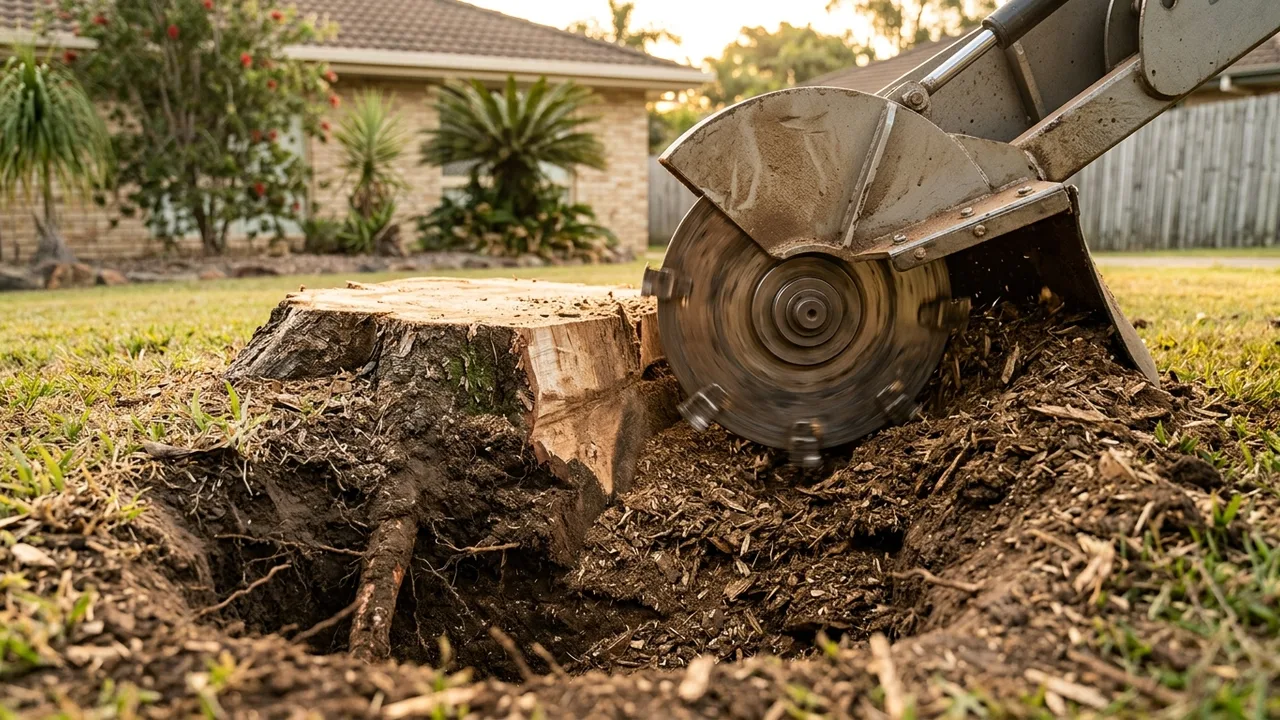
Tree species matters a lot. Poinciana stumps, which are extremely common in Chelmer, Graceville, and Sherwood, tend to have dense, fibrous root collars that need more passes to break down. Fig trees, which appear in older St Lucia and Taringa gardens, can have enormous surface root systems that spread well beyond the stump itself. A camphor laurel left at 150 mm will almost certainly reshoot; those typically need a deeper cut or chemical treatment of the remaining root material.
Stump diameter and age change the job. A freshly cut 600 mm jacaranda in a Moorooka backyard takes longer to grind than a small, rotted mango stump that has been sitting for five years. Rotted wood is softer and grinds faster. Fresh cuts are harder and slower.
What sits nearby. If there is a concrete path, driveway, or retaining wall adjacent to the stump, the operator has to be careful not to undercut the substrate. In older Queenslander-style properties around Corinda and Fairfield, established stumped-and-stumped footings can sit surprisingly close to tree roots. The grinder has to work around those rather than through them.
What you plan to do with the area. Turfing over a spot requires less depth than laying a concrete slab. A pool installation or new garden bed with deep-rooted plants needs the stump gone and the soil profile reasonably clear.
Surface Roots: A Separate Problem
The depth of the central stump grind does not address surface roots that run laterally away from the base. These are the roots that crack paths, lift pavers, and buckle lawn edges. They are a common complaint in the Inner West, where older street trees and large shade trees have had decades to push roots under concrete.
Grinding the central stump to 250 mm and leaving the surface roots alone is a perfectly reasonable choice if you just want the stump cleared and the roots are not causing problems. If you have a root lifting a driveway in Indooroopilly or a garden path in Yeronga, that root needs to be traced and ground or excavated separately.
Root system removal is a more involved job. The operator follows the root run with the machine, working along exposed sections. It takes longer, uses more fuel, and creates more chip spoil. It also costs more, typically sitting toward the higher end of the $200 to $1,000 range depending on how extensive the root run is. But it solves the actual problem rather than just clearing the visual one.
Depth for Specific End Uses
Here is a practical guide to what depth you actually need, depending on what comes next.
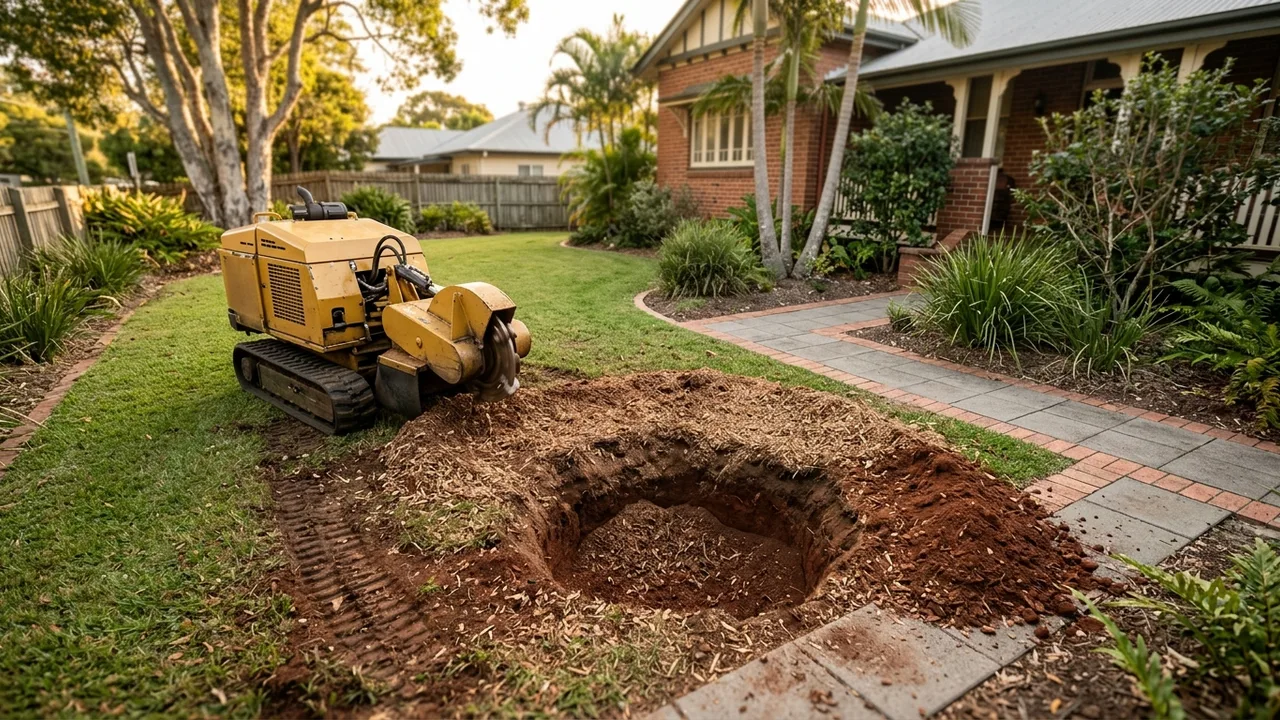
- Turfing or lawn restoration. 150 mm to 200 mm is usually enough. You backfill the pit with the chip mix and topsoil, let it settle, and turf over. The chips break down over one to three years.
- Garden bed planting. 200 mm is typically sufficient for most ornamental plantings. If you are putting in a large tree or shrub with deep roots, aim for 250 to 300 mm to give the new plant's roots room to establish without hitting a buried wood mass.
- Paving, concrete paths, or driveways. 200 to 250 mm as a minimum. You want the substrate stable. A buried stump that continues to rot will create a void beneath a concrete slab, which eventually cracks.
- Pool installation or structural slab. This moves beyond standard stump grinding into site preparation. The stump and any significant roots within the footprint need to go, and the soil profile needs to be assessed. We do this work as part of site preparation grinding, and we are upfront when something needs an excavator rather than just a grinder.
- Fencing. A fence post going in next to a stump needs the stump low enough that the post hole can be dug cleanly. Typically 200 mm is enough, but it depends on where the post lands relative to the remaining root material.
What Happens to the Chips Left Behind
After grinding, the pit contains a mixture of wood chip, bark fragments, and displaced soil. This material is not ideal for backfilling without some management. Wood chips continue to break down, which means the filled area can settle noticeably over the first season or two.
If you are turfing over the area, mounding the backfill slightly above grade allows for that settling. If you are concreting or paving, the chip mix should be removed and replaced with compacted fill or crusher dust. Leaving wood chip under a hard surface is a reliable way to get cracking and subsidence later.
We offer chip and debris cleanup as an add-on. Some customers want the chips left as mulch for garden beds, which is a reasonable use. Others want the site cleared completely and the pit backfilled. Both are straightforward; it just comes down to what you want done with your yard.
Honest Trade-offs: Grind Deep vs Grind Standard
Going deeper costs more in time and machine wear. That is just the reality. A grind to 300 mm on a large stump might add $50 to $150 to a job compared to a standard 200 mm cut. Whether that is worth it depends entirely on the end use.
If you are turfing, the extra depth probably does not matter. If you are concreting, it likely does. If you are dealing with a species known to reshoot, such as camphor laurel or some ficus varieties, going deeper (or combining grinding with a chemical stump treatment) is worth the extra cost.
DIY stump grinding is available through hire companies. The machines are manageable for stumps under about 300 mm in diameter, but they are physically demanding to operate and the hire cost adds up quickly if the job takes more than a few hours. For a single small stump, it can make sense. For multiple stumps or anything near infrastructure, a professional operator will likely be faster and less risky.
A Straightforward Closing Thought
The depth question is really the end-use question in disguise. Most Brisbane stumps in suburban yards go to 200 to 250 mm, and that handles the majority of lawn, garden, and light landscaping uses. If you have a specific plan for the spot, it is worth mentioning that when you call for a quote, so the operator can adjust accordingly.
We cover Chelmer and the surrounding Inner West suburbs including Indooroopilly, Taringa, St Lucia, Graceville, Sherwood, Corinda, Yeronga, Fairfield, and Moorooka. If you want to talk through what depth makes sense for your stump and your plans, give us a call and describe the site. A quick conversation usually answers the question.
Quick answers