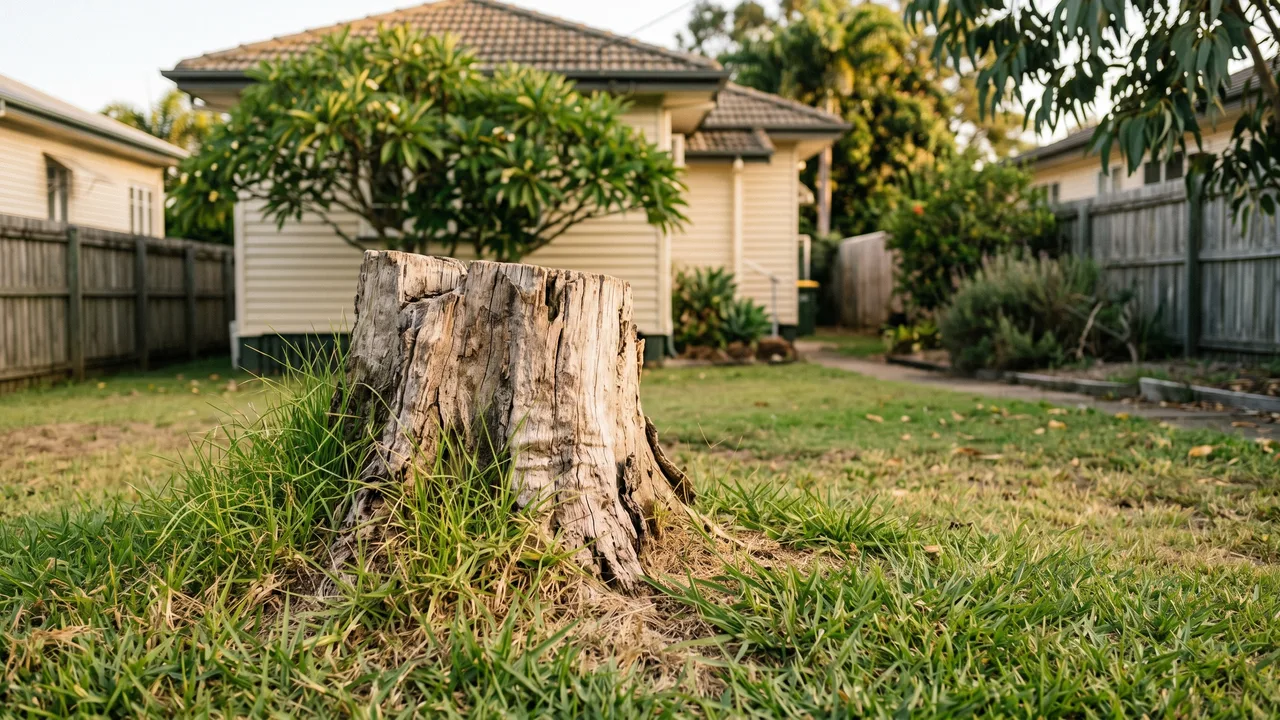
Stump Grinding guide
How Long After Tree Removal Should You Grind the Stump?
You Can Grind It Straight Away — But Should You?
The short answer: you can grind a stump the same day the tree comes down. There is no mandatory waiting period. That said, there are genuine reasons why waiting a few weeks (or acting immediately) can each make sense, depending on your situation. Understanding the difference will save you time, money, and a headache or two.
Why Timing Matters at All
A freshly cut stump is wetter and denser than one that has had weeks to dry out. Green timber still holds a lot of moisture in the fibres, which means the grinder chews through it differently. It is not impossible — we grind fresh stumps all the time — but the wood chips produced are wetter and heavier, and the machine works a little harder.
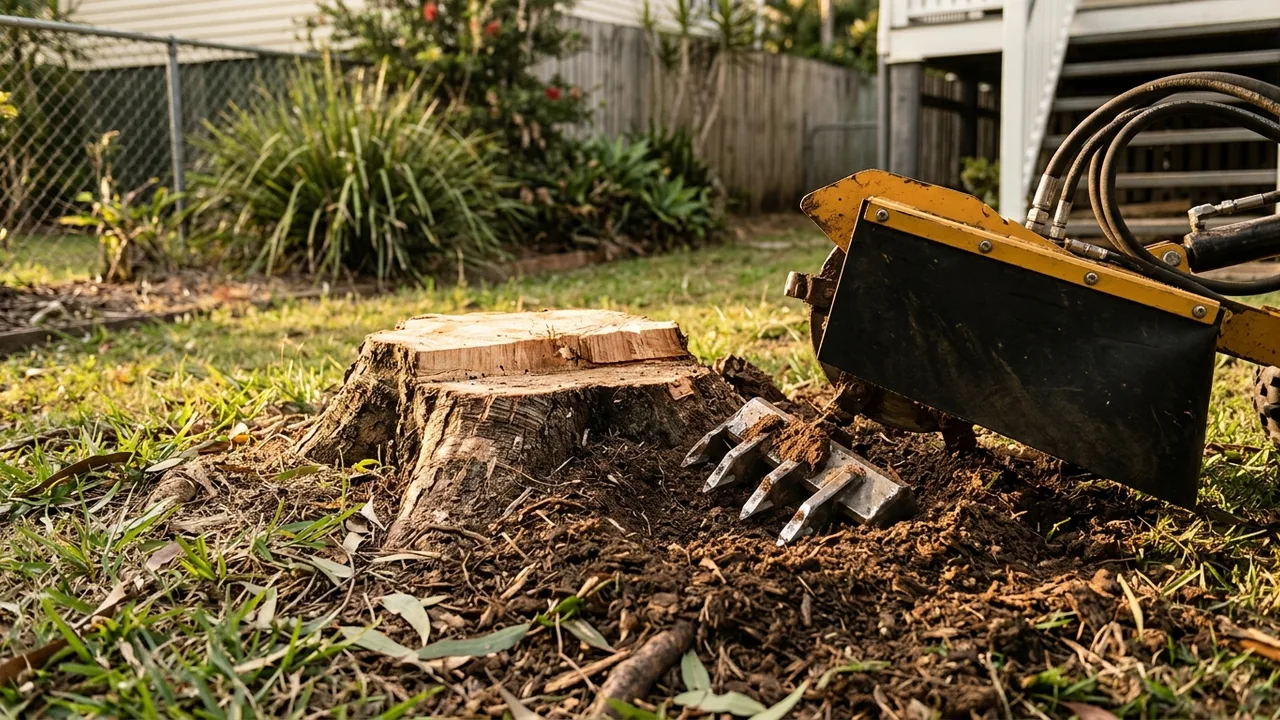
A stump that has dried for four to six weeks tends to grind a touch more efficiently. The wood is less fibrous and breaks down faster under the cutting teeth. In practical terms, this rarely changes the price dramatically, but it can affect how long the job takes on a very large stump.
On the flip side, waiting too long creates its own problems. A stump left for months can become a launching pad for fungal growth, termites, and other timber pests. In Brisbane's subtropical climate — particularly across the Inner West suburbs like Sherwood, Graceville, and Chelmer — warm, humid summers accelerate that process noticeably. A stump left sitting through a Brisbane summer is an invitation you probably do not want to extend to your local termite population.
When to Grind Immediately
Some situations make waiting a bad idea. Here are the clearest ones.
After a storm-felled tree. If a tree came down in wild weather, the stump is already a trip hazard and possibly a safety issue if it is near a path, driveway, or play area. We offer emergency stump clearance across our service area — Moorooka, Yeronga, Fairfield, Indooroopilly and the rest — precisely because waiting a month for a hazard to sit in your yard is not a reasonable option.
Before fencing, landscaping, or a pool. If a contractor is arriving in two weeks to install a fence or break ground for a pool, you need the stump and its root system gone before they show up. Scheduling grinding immediately after tree removal keeps your project on track. Delays cost money when trades are already booked.
When the stump is in a high-traffic area. A stump near a path or on the kerb strip in a suburb like Taringa or St Lucia, where footpaths get regular pedestrian use, is a liability risk. Local councils can issue notices if a hazard on your frontage injures someone. Getting it ground quickly is the straightforward call.
If you are dealing with a weed tree or invasive species. Some species — camphor laurel and privet come up regularly in Inner West Brisbane gardens — will reshoot from a stump if left alone. Grinding promptly removes the energy source the roots are trying to regenerate from.
When Waiting a Few Weeks Makes Sense
There are also sensible reasons to hold off, if the situation allows.
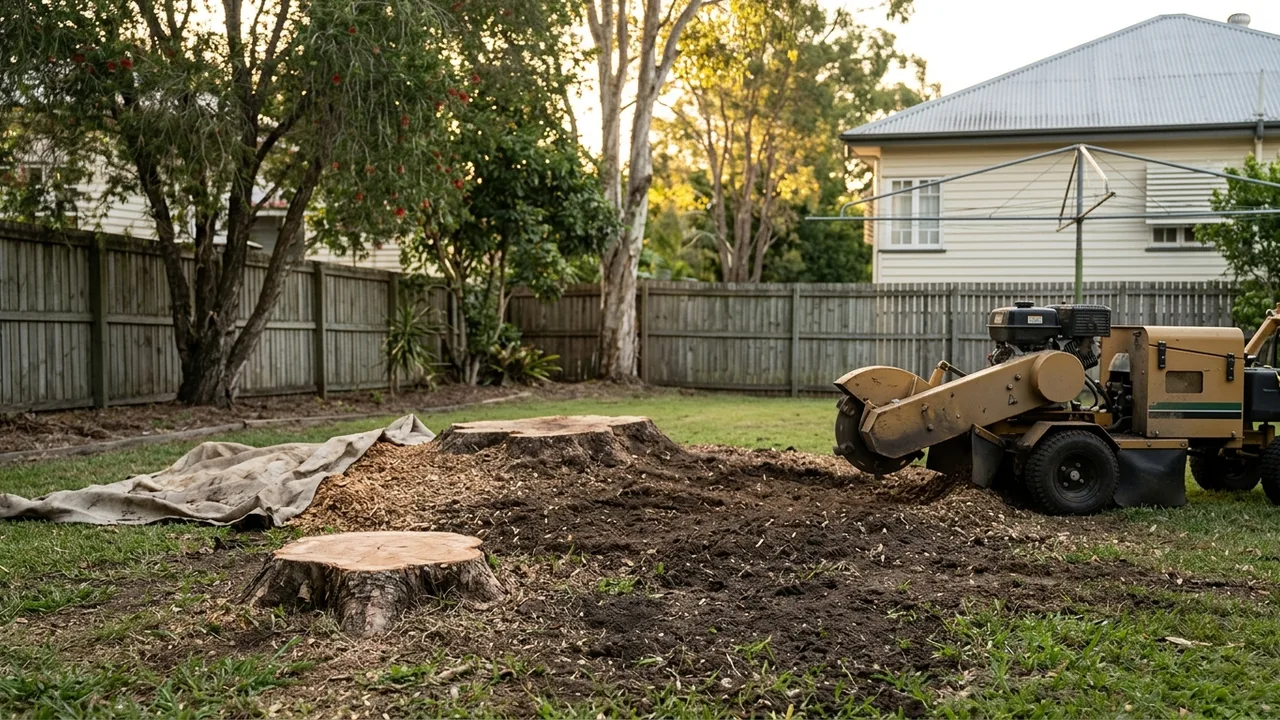
If you have multiple stumps across the property from a large garden clearance, it often makes financial sense to schedule one grinding visit once all the removal work is done. Multi-stump grinding on a single visit is more cost-efficient than two separate bookings. The stump sitting for three to four weeks while you sort the rest of the job is not going to cause harm in that timeframe.
Similarly, if you are mid-way through a larger landscaping project and the area around the stump is still being worked on, there is no point grinding into a zone that is about to be dug up again anyway. Coordinate the grinding to happen just before the area gets its final treatment — whether that is turf, garden beds, or paving.
What Happens Underground: Roots and Regrowth
Grinding above the soil line is only part of the picture. Most stump grinders work to roughly 200 to 300 millimetres below the surface, which handles the bulk of the stump and the main lateral roots directly beneath it.
However, larger trees — especially mature poinciana, jacaranda, and fig trees common across Chelmer, Corinda, and surrounding suburbs — often have surface roots that extend well beyond the stump itself. These roots can buckle paths, lift garden edging, and crack driveways even after the stump is gone.
If root system removal is part of the plan, it is worth discussing this before grinding day. Targeting surface roots at the same time as the stump is more efficient than coming back a second time. And if roots are already causing damage to paving or garden structures, the longer you leave them, the worse that damage typically gets.
For site preparation work — ahead of a new build, pool, or major landscaping in suburbs like St Lucia or Indooroopilly where block sizes often call for careful ground clearing — we grind and excavate root systems as part of the preparation process. Getting this done promptly after tree removal means builders are not working around obstacles.
The Practical Cost Question
Stump grinding in Brisbane typically runs somewhere between $200 and $1,000 depending on stump diameter, species hardness, access to the site, and whether root removal is part of the scope. The timing of when you book relative to tree removal does not usually change the price meaningfully.
What does affect cost is access. If a tree crew has left and the access point they used is now blocked, or if a large amount of tree debris is still piled around the stump, the job takes longer. Coordinating stump grinding close to tree removal — ideally the same day or within a day or two — often means the site is still accessible and clear enough to work in efficiently.
If you want chip and debris cleanup included (we carry this as an add-on), booking it all together is simply easier to manage than staging it across multiple visits.
A Straightforward Recommendation
If timing is flexible and you have no safety concern or project deadline, waiting two to four weeks after tree removal is a perfectly reasonable approach. The stump will be slightly easier to grind, and you have time to decide whether you want root removal, chip cleanup, or any other work done alongside.
If there is a hazard, a contractor arriving soon, or an invasive species trying to reshoot, do not wait. Book the grinding as soon as the tree is down.
Either way, have a look at the stump and its visible surface roots before you call. Note the approximate diameter at the base, whether any roots are lifting nearby paving, and what access the site allows (gate width, slope, obstacles). That information helps us give you an accurate quote without needing a separate site visit first.
We cover Chelmer, Graceville, Sherwood, Corinda, Indooroopilly, Taringa, St Lucia, Yeronga, Fairfield, and Moorooka. If you are in one of those suburbs and ready to sort the stump, get in touch and we will work out a time that fits your schedule.
Quick answers