Stump Grinding guide
Will a Ground Stump Still Sprout Shoots After Grinding?
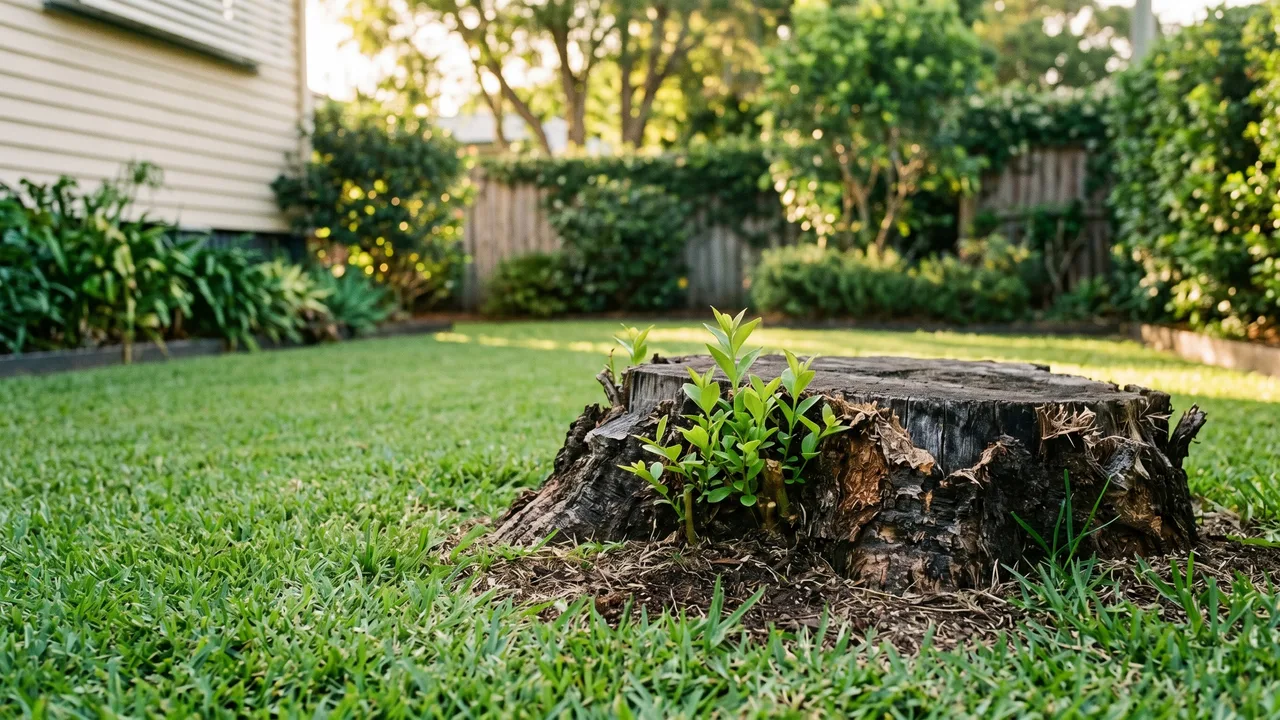
Yes, a ground stump can still sprout shoots after grinding. Whether it does depends mostly on the tree species, how deep the grinding went, and how much of the root system remains alive underground.
That is the honest answer upfront. The rest is about understanding why it happens, which species cause the most headaches in Brisbane's Inner West, and what you can do about it.
Why Roots Don't Die Just Because the Trunk Is Gone
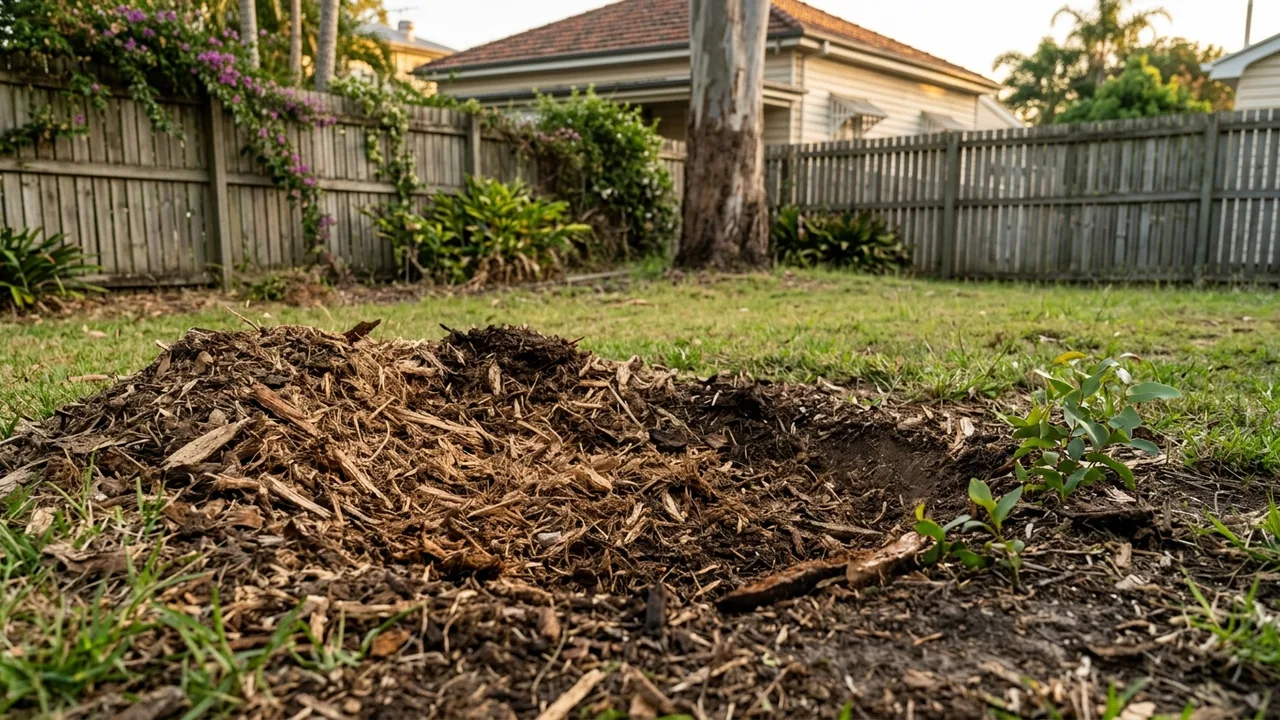
A stump grinder removes the visible timber, but it does not sterilise the root system. In most residential grindings, the machine takes the stump down 150 to 300 mm below ground level. The lateral roots that spread outward, sometimes several metres, stay in the soil largely intact.
For many tree species, those roots still hold stored carbohydrates. The tree, in a biological sense, is not dead yet. It detects the loss of its trunk and responds by pushing energy into new growth. This is called coppicing or suckering, depending on where the new shoots emerge. Coppice shoots come from the cut stump base; suckers come from lateral roots and can pop up well away from where you had the stump ground.
The frustrating part is that sucker growth can appear weeks or even months after grinding. You fill the hole, lay turf, and then something green pokes through 60 cm away from where the stump was.
Which Tree Species Are the Worst Offenders in Chelmer and Surrounds
Species matters a great deal here. Some trees die cleanly once the stump is ground. Others seem almost determined to survive.
In Chelmer, Indooroopilly, Graceville, Sherwood and the surrounding suburbs, the species most likely to reshoot after grinding include:
- Camphor laurel (Cinnamomum camphora). Extremely vigorous resprouter. A common street and garden tree across Inner West Brisbane. Even partial root sections can throw new growth for a year or more.
- Mulberry. Fast-growing, aggressive rooter. Backyard mulberry stumps in Taringa and St Lucia gardens are known for persistent suckering.
- Coral tree (Erythrina spp.). Shallow, fleshy roots that reshoot readily. Popular in older Queenslander gardens. Classified as invasive in parts of Queensland.
- Jacaranda. Beloved along many streets from Chelmer to Yeronga, jacarandas are generally moderate resprouters. Properly deep grinding usually handles them, but shallow grinds on large specimens leave enough root energy to push a few shoots.
- Ficus species (ornamental figs). Highly vigorous. Root systems can extend far beyond the canopy drip line, and suckering from lateral roots is common.
- Leopard tree (Caesalpinia ferrea). Increasingly common in Inner West streets and gardens. Tends to reshoot if grinding depth is insufficient.
Trees that typically do not reshoot after grinding include conifers, palms, and most eucalypts (though some eucalypt species will sucker under certain conditions). If you have a silky oak or a poinciana, you are generally in better shape.
How Grinding Depth Affects the Outcome
Grinding depth is the single biggest controllable factor. A standard residential grind to 150 mm below the soil surface is enough for most practical purposes, including laying turf. But for species with high resprouting potential, going to 200 to 300 mm significantly reduces the carbohydrate reserves available to drive new growth.
Deeper grinding costs a little more in time and wear on the machine, but for a camphor laurel in a Graceville backyard where you want a clean lawn, it is often worth requesting. When you book a job with us, it is worth mentioning the tree species so we can advise on appropriate depth for your situation.
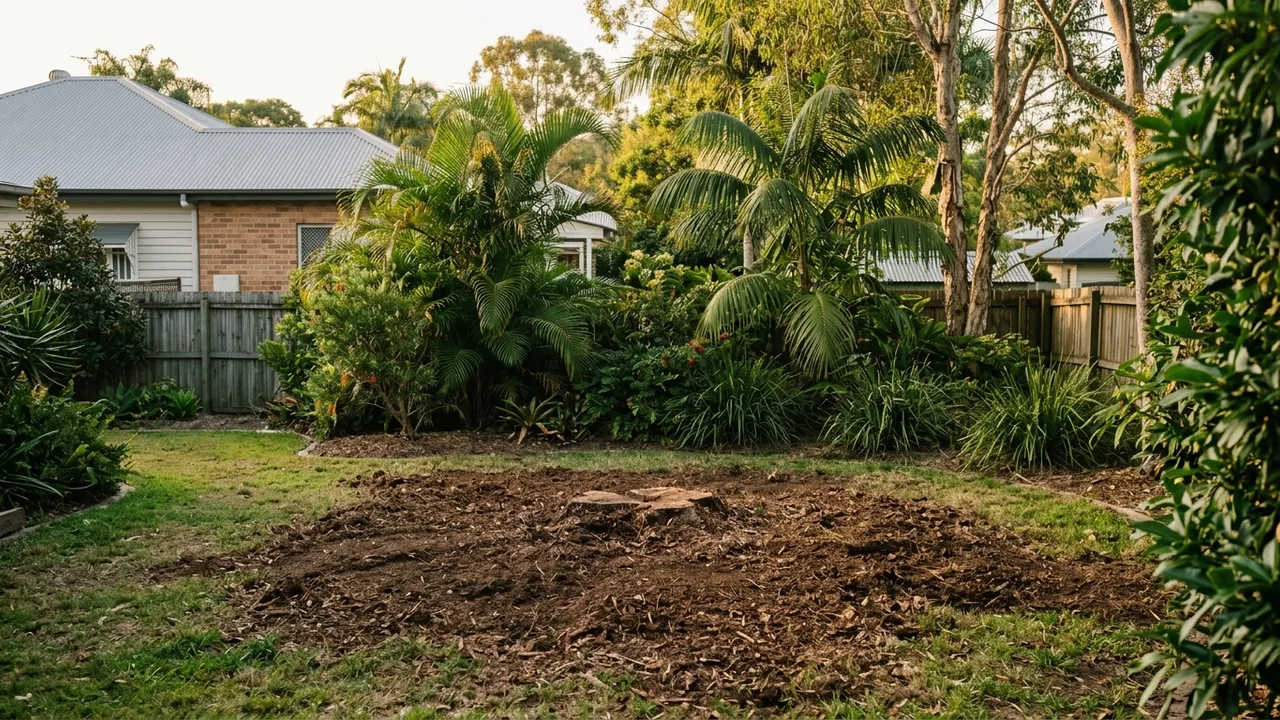
One honest trade-off: deeper grinding creates a larger void. That void needs to be backfilled properly with soil or a soil-compost mix, and it will settle over several months. If you are planning to pave or concrete over the area soon after, you need to allow for that settlement, or discuss whether the root system removal service is more appropriate for your project.
Can You Use Chemicals to Stop Resprouting?
Some people ask about applying herbicide to the ground stump or to sucker regrowth. It is a legitimate option, but it comes with trade-offs.
Herbicide applied to the freshly ground surface of a high-risk species can help kill remaining root tissue. Products containing triclopyr or picloram are commonly used for this in Queensland. However, this approach requires care. Some of these chemicals persist in the soil and can affect nearby plants. Ficus roots that are intertwined with the roots of a garden bed you value could be a problem.
Foliar application to sucker regrowth is often effective and lower risk than soil application, because you are treating green growth rather than saturating the soil. You wait for the suckers to reach a manageable size, apply herbicide to the leaves, and repeat as needed.
The honest answer is that for genuinely aggressive species, a combination of deep grinding plus targeted herbicide treatment of any subsequent regrowth gives you the most reliable long-term result. Neither method alone is a guaranteed once-and-done solution for something like a mature camphor laurel.
If you are dealing with a species listed as invasive in Queensland, check with your local council before treating or removing, as conditions sometimes apply.
What to Do If Shoots Appear After Grinding
If you notice green shoots appearing after your stump grind, deal with them promptly rather than leaving them. Small suckers are easy to remove or treat. Left alone for a season, they can re-establish meaningful root growth, and you are back closer to where you started.
Practical options in order of effort:
- Pull or cut small suckers immediately. For low-vigour species, repeatedly removing growth as it appears will exhaust the root system over one growing season. It requires persistence but no chemicals.
- Apply a cut-stump or basal bark herbicide treatment to regrowth from high-vigour species. A licensed contractor or a competent DIYer with the right product can manage this. Read the label, particularly around proximity to waterways, which matters near Oxley Creek and the Brisbane River corridor through Sherwood, Corinda and Yeronga.
- Request a follow-up deeper grind if the original depth was insufficient. Sometimes this is the cleanest solution on a large specimen where roots had significant mass.
If you are planning to plant into the area, wait. New plantings sitting directly over active, competing root tissue struggle to establish. Give the area a season, manage any regrowth, and then plant into reasonably settled, competition-free soil.
The Realistic Expectation After a Professional Grind
A professional stump grind does not guarantee zero regrowth, and anyone who tells you otherwise is overselling the service. What it does is remove the above-ground problem, eliminate the trip hazard, allow lawn or garden bed establishment, and significantly reduce (often eliminate) the biological pressure driving new growth.
For the majority of stumps we grind across Chelmer, Indooroopilly, Corinda, Fairfield and the surrounding suburbs, resprouting is not a follow-up issue. The species is benign, the grinding depth is appropriate, and the customer fills the void and gets on with life.
For the minority of jobs involving camphor laurel, large ficus specimens, or coral trees, we will tell you upfront that monitoring for 6 to 12 months is sensible. That is not a failure of the grind; it is just the biology of those particular trees.
If you want a thorough conversation about what to expect for your specific tree before booking, call or message us. We are happy to talk through species, depth, root system risk, and whether any follow-up treatment is likely to be needed. No obligation in having that conversation.
Quick answers