Stump Grinding guide
Can You Plant a New Tree Where You Grind Out an Old Stump?
Can You Plant a New Tree Where You Grind Out an Old Stump?
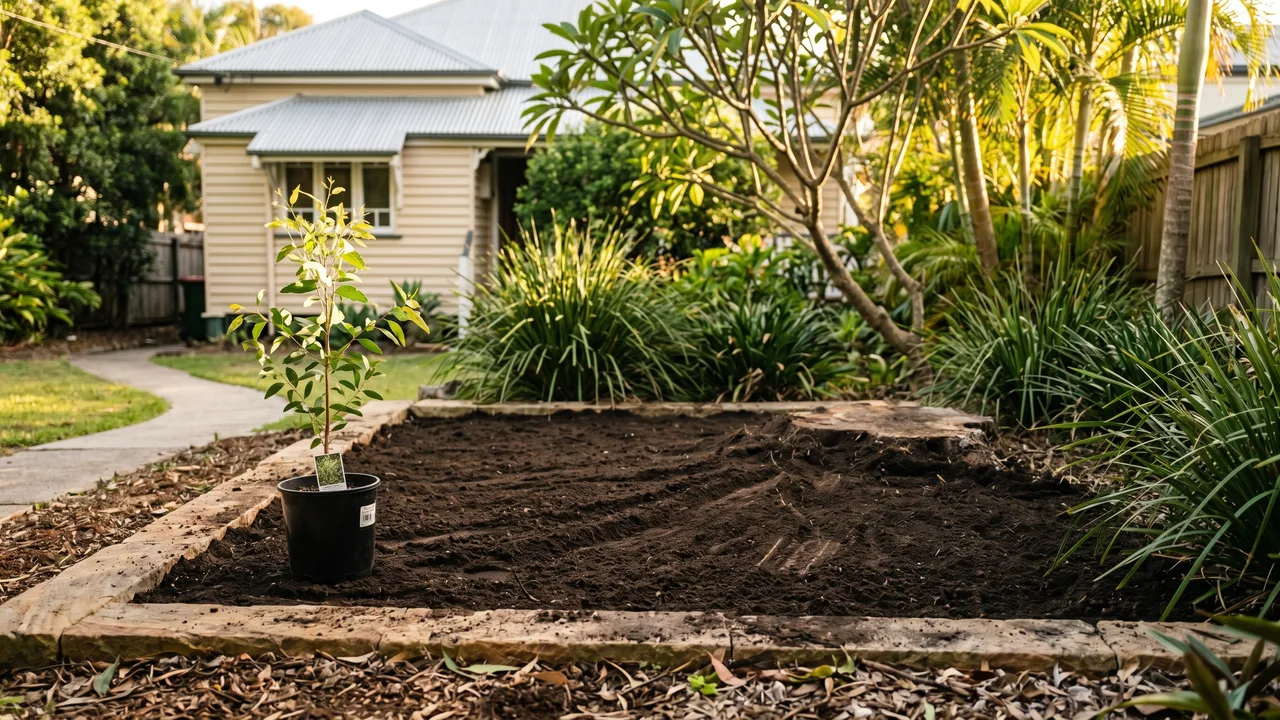
Yes, you can plant a new tree where a stump was ground out, but not straight away and not without some preparation. The condition of the soil underneath matters a lot, and skipping a few simple steps often leads to a struggling or failing tree.
Here's what you actually need to know before you grab a new sapling.
What Stump Grinding Leaves Behind
A stump grinder chews the stump down to below ground level, typically 150-300 mm deep depending on the machine and the operator. What it leaves behind is a mix of wood chips, sawdust, and shredded root material filling the hole where the stump sat.
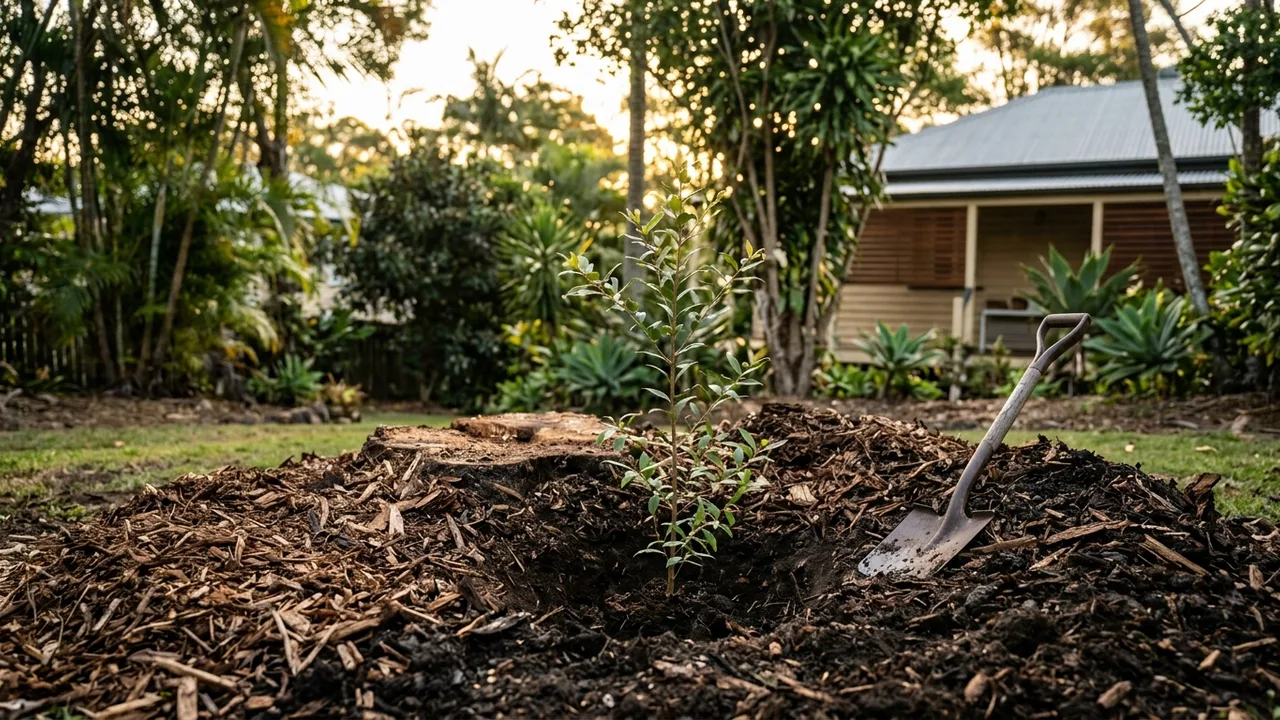
That mulchy mix looks like good garden material. In practice, it behaves differently from healthy topsoil. Fresh wood chips are high in carbon and low in nitrogen. As they break down, soil microbes work overtime consuming nitrogen from the surrounding soil to do it. If you plant directly into that zone, your new tree starts life in nitrogen-deficient ground.
The other issue is settlement. A hole full of wood chip and loosened soil will compact and sink as it decomposes, sometimes noticeably over the first year or two. A tree planted into that before it stabilises can end up sitting lower than the surrounding ground, which affects drainage and can cause collar rot.
How Long Should You Wait?
As a rule of thumb, most arborists suggest waiting at least six months before planting into a ground-out stump site. A year is better if the original tree was large or had dense, resinous timber. For big old specimens common in Chelmer and Indooroopilly, such as Poinciana, Camphor Laurel, or Jacaranda, the root mass is substantial and decomposition takes time.
There are things that speed it up and things that slow it down:
- Adding nitrogen to the wood chip fill (a handful of high-nitrogen fertiliser or a blood and bone mix) gives soil microbes what they need and accelerates breakdown significantly.
- Keeping the area moist helps microbial activity. Brisbane's dry winter months slow decomposition if you're not watering.
- Leaving it exposed and working it occasionally with a fork lets oxygen in, which helps aerobic decomposition.
If you want to plant sooner rather than later, the practical approach is to excavate the wood chip material out entirely, bring in quality topsoil to backfill, and plant into that. It costs more effort (or money, if you hire someone to do it), but it removes the waiting period.
Does It Matter What Tree You're Replacing?
Yes, and this is a detail a lot of people overlook. Some trees produce compounds in their roots and decomposing timber that inhibit the growth of new plants, a process called allelopathy. Camphor Laurel (Cinnamomum camphorum) is probably the most relevant local example. It's a declared invasive species in Queensland, and its roots release oils that can suppress new growth. If you've had a Camphor Laurel ground out, it's worth excavating the chip mix thoroughly rather than planting straight into it.
Eucalypts can also have allelopathic effects, though the research on this is mixed. Brisbane's Inner West has plenty of mature eucalypts in older gardens, so it's worth noting.
The flip side of this is disease. If the original tree was removed because of a fungal infection, such as Phytophthora root rot or Armillaria (honey fungus), the pathogen can persist in the remaining root material. Planting another susceptible species into the same spot can lead to the same outcome. If disease was the reason for removal, get advice from a local arborist before you choose what to plant there.
Choosing the Right Species for the Site
Once the site is ready, think carefully about what you put in. The soil structure around a grinding site is usually disturbed and compacted at the edges, even if the centre has been filled. A tree that tolerates those conditions will establish faster than one that needs perfect drainage and aeration.
A few things worth considering:
- Match the soil type. The Inner West suburbs (Taringa, Graceville, Sherwood, St Lucia) often have reactive clay soils under the topsoil. After excavation around a stump, that clay layer can be exposed. Some native species handle this well; others don't.
- Consider root behaviour. One of the main reasons stumps get ground in the first place is that the original tree's roots were lifting paths, driveways, or garden edges. It makes sense to avoid replanting a species known for aggressive surface roots in the same spot.
- Think about the overhead space. If you're replanting close to a structure or under power lines, choose something that suits the available space at maturity.
Native species like Lilly Pilly, Tuckeroo, or smaller Bottlebrush cultivars are popular choices in Brisbane gardens for good reason. They're drought-tolerant once established, relatively well-behaved at the root, and don't need heavy fertilising.
Practical Steps Before You Plant
Whether you're waiting out the decomposition period or backfilling straight away, here's a sensible order of operations:
- Clear the chip. Remove as much of the wood chip spoil from the grinding as practical. If the operator left it in the hole, excavate 300-400 mm down and set it aside for compost rather than using it as fill.
- Test the drainage. Fill the hole with water and watch how quickly it drains. Slow drainage (more than a few hours to clear) suggests poor soil structure beneath. You may need to loosen the subsoil or mix in gypsum before backfilling.
- Backfill with quality material. A blend of good topsoil and compost at roughly 70/30 is a reasonable starting point. Avoid using the raw wood chip as fill directly under the root zone of a new tree.
- Add nitrogen. A slow-release fertiliser mixed into the backfill helps offset the nitrogen draw-down from any remaining organic material.
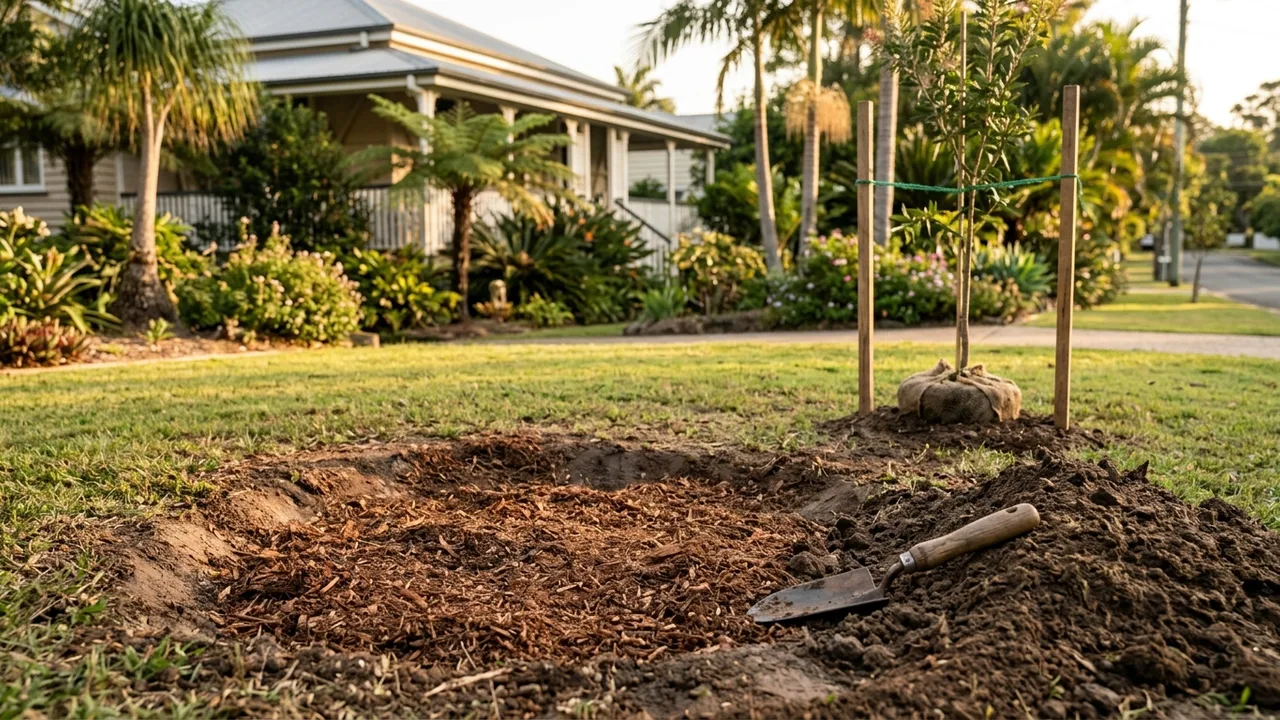
- Plant at the right depth. The root flare (where the trunk widens into the roots) should sit at or just above ground level.
- Mulch the surface. A 75 mm layer of mulch over the planting zone retains moisture and moderates soil temperature, but keep it clear of the trunk.
Timing Your Grinding and Planting Together
If you know you want to replant, it's worth thinking about both the grinding and the planting as a single project rather than two separate ones.
We can grind a stump and clear the chip debris in the same visit. If you're planning to replant, let us know beforehand and we can take more care to remove the chip spoil cleanly rather than leaving it to decompose in the hole. That saves you the effort of excavating it yourself later.
For Brisbane's climate, the best window to plant most trees is late summer through to mid-autumn (February to April), when there's still warmth in the soil but temperatures are easing and rain is more reliable. Spring can work too, but planting in the heat of a Brisbane summer means more watering and more stress on the new plant. If your grinding job is coming up and you want to replant in the next good planting window, it's worth factoring that into your timing.
A Closing Recommendation
The headline question has a nuanced answer. Yes, plant a new tree there. But give the site the attention it needs first. Excavate the chip material, backfill properly, choose a species suited to the soil and the space, and you'll have a much better result than if you plant straight into the grinding spoil and hope for the best.
The preparation work isn't complicated. It just requires a bit of patience and a willingness to do the groundwork before you plant. If you're unsure about the condition of the site or what's worth planting there, a chat with a local arborist is worth the time.
If you need the stump ground first and want the site left in good shape for replanting, give us a call. We cover Chelmer, Indooroopilly, Taringa, St Lucia, Graceville, Sherwood, Corinda, Yeronga, Fairfield, and Moorooka. We're happy to talk through what makes sense for your yard before we quote.
Quick answers