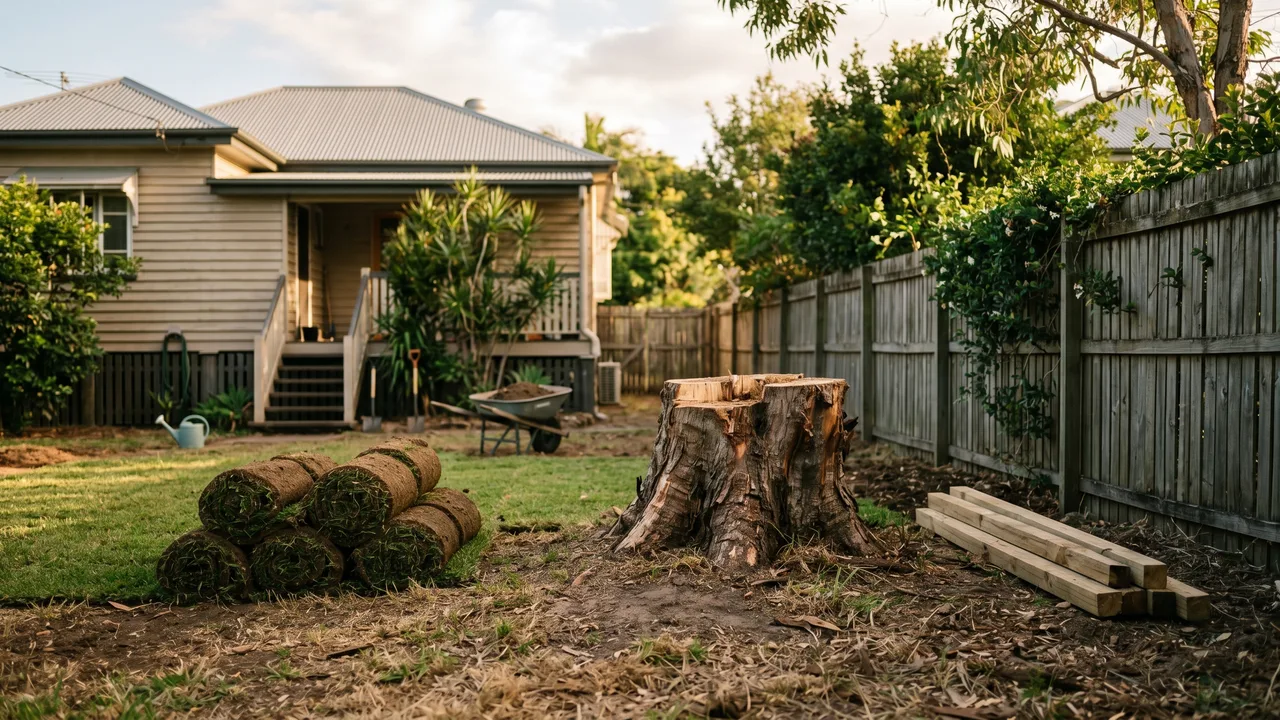
Stump Grinding guide
Why You Should Always Grind Stumps Before Landscaping or Fencing
Grinding stumps before you landscape or fence isn't just a nice-to-have. It's the step that stops a whole project from unravelling six or twelve months after the tradies have packed up and left.
If you've had a tree removed recently, or you're working around old stumps left by previous owners, here's why dealing with them first is worth every dollar.
What Happens When You Landscape Over a Stump
The stump doesn't just sit there quietly. It decays, and that decay takes years, sometimes a decade or more depending on the species. As the wood breaks down, the soil above it settles and compresses unevenly. Garden beds develop soft spots. Pavers tilt. Lawn areas sink in patches that are annoying to mow and genuinely hazardous to walk on.
In suburbs like Sherwood, Graceville, and Chelmer, where large established trees, including camphor laurels, figs, and Poinciana, are common on older residential blocks, stumps are often substantial. A mature fig stump might be 600 mm across. The root system beneath it could extend several metres in every direction. Laying turf or garden mulch over that is a short-term fix at best.
There's also the regrowth issue. Many tree species in this part of Brisbane will absolutely send up new shoots from a stump left in the ground. Camphor laurel is particularly persistent. You'll pull one shoot, three more appear. If you've gone to the trouble of building a garden bed around the stump, pulling those shoots means disturbing the whole planting.
Why Fencing Over a Stump Is a Specific Problem
Fencing is where skipping stump grinding causes the most visible and expensive damage.
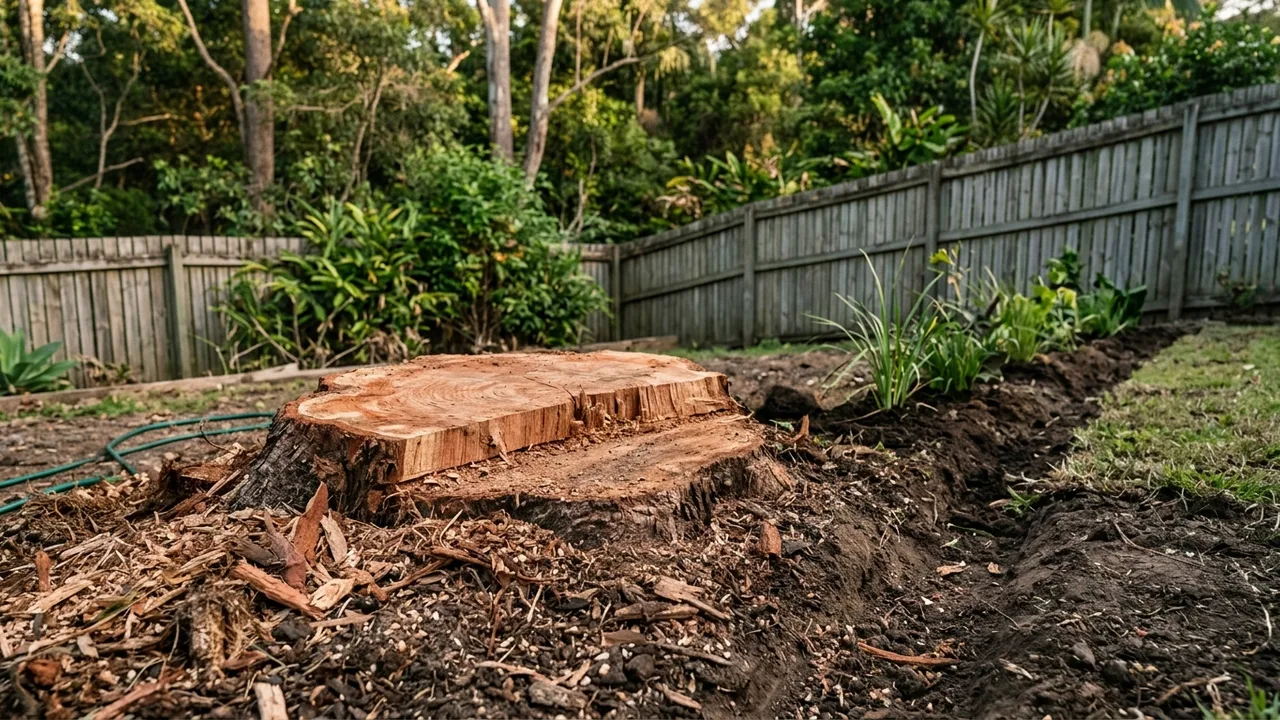
Post placement near a stump is compromised from the start. The post either goes into soft, decaying wood that won't hold it properly, or it has to be repositioned to avoid the stump entirely, which throws off your fence line. Neither situation is ideal, and a fencing contractor worth their quote will tell you the same.
As the stump continues to rot underground, the soil around it shifts. Posts that seemed solid at install start to lean. Panels rack out of alignment. In some cases, root systems that haven't been removed continue growing and physically push fence posts sideways.
Colourbond and timber fencing both suffer here, but timber is particularly susceptible because fungal rot from a nearby decaying stump can transfer to a timber post if there's soil contact. It shortens the post's lifespan noticeably.
If you're in a suburb like Indooroopilly or St Lucia where properties back onto slopes or creek lines, ground movement is already a factor. Adding an unground stump to that equation compounds the risk.
The right sequence is simple: grind the stump, let the site settle for a week or two if you can, then bring the fencer in.
The Root System Question (It's Often Bigger Than the Stump)
Most people focus on what they can see above ground. The stump itself. But the surface roots radiating out from it can run for metres and can be 50 to 100 mm in diameter well away from the base.
Those roots cause their own problems. They buckle garden edging. They crack concrete paths. In older properties across Taringa and Yeronga, it's common to find a path or driveway that's been heaved up over the years by roots from a tree that was removed long ago, because only the trunk was dealt with and the roots were left to do their thing.
Standard stump grinding typically takes the stump down 150 to 300 mm below ground level. That handles the main structure. But if you're laying pavers, pouring a slab, or installing raised garden beds close to where the tree stood, you may also need surface root removal, which means grinding or excavating those lateral roots before they become your path's problem.
It's worth being upfront with whoever is grinding your stump about what you're building next. A landscaping project or a fence run close to the stump zone warrants a deeper grind and a conversation about what the root spread looks like. We always recommend a quick walk-around before grinding starts so nothing gets missed.
Timing: When to Grind Relative to Your Project
Ideally, stump grinding happens before any other site work. Before the landscaper measures up. Before the fencer quotes. Before the retaining wall goes in.
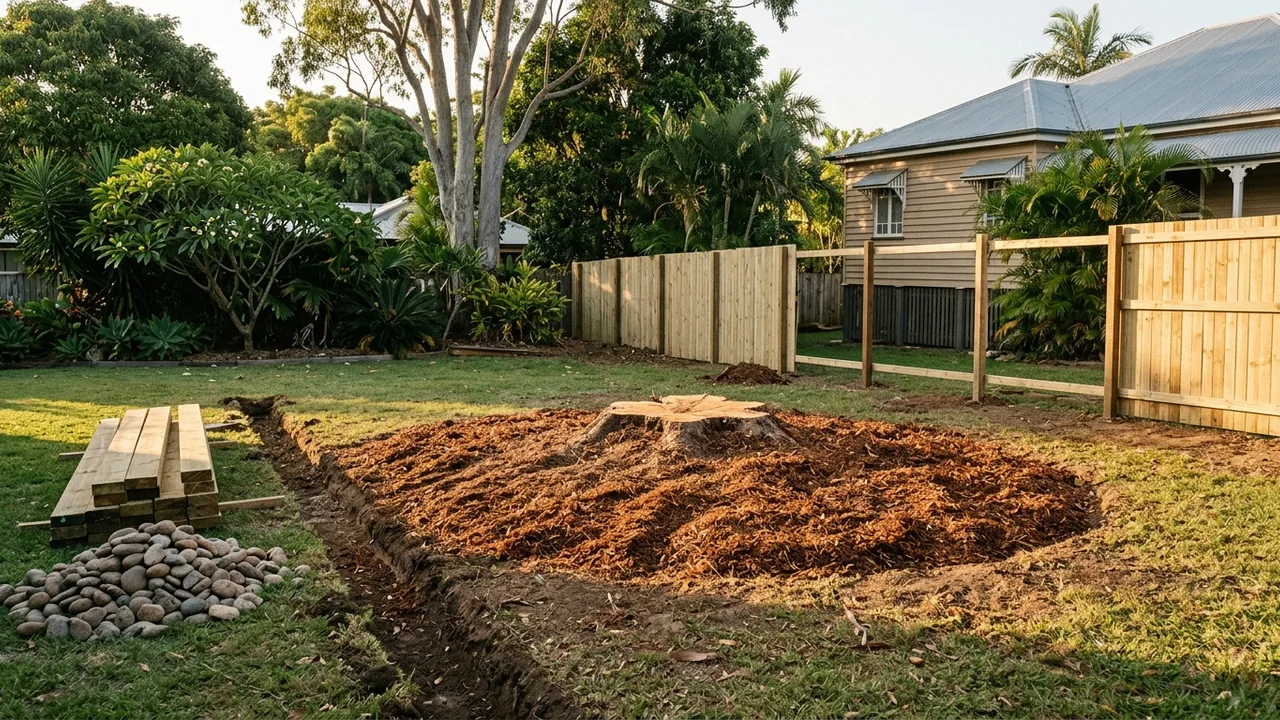
The practical reason is access. A grinder needs clear space to manoeuvre, and once you've installed garden edging, irrigation, or new turf, the machine is more likely to cause collateral damage getting to the stump. Grinding first keeps it simple.
There's also the chip question. Grinding produces a volume of wood chip and sawdust that gets incorporated into the soil and needs to be cleared out if you're preparing a planting bed or a hard surface. Fresh wood chip robs nitrogen from the soil as it decomposes. You don't want it sitting underneath a new lawn or mixed into a garden bed without first being removed and replaced with clean fill or compost.
If you opt for chip and debris cleanup as part of the job, the area can typically be backfilled and ready for landscaping within a few days. That's a much cleaner starting point than working around a mound of sawdust-mixed soil.
Cost Versus Convenience: Is It Worth Grinding a Small Stump?
Fair question. Not every stump warrants the same approach.
A small stump from a 100 mm diameter ornamental tree, sitting in the middle of a lawn well away from any planned work, might not need immediate attention. You could mow around it for a season and revisit.
But if the stump is anywhere near a fence line, a path, a garden bed, or a new structure, the cost of grinding it now is almost always less than the cost of correcting problems later. A single stump grind in the Brisbane Inner West typically runs somewhere in the $200 to $500 range depending on size and access. That's a fraction of what it costs to relay pavers, straighten a fence, or rebuild a garden bed once root decay has done its work.
Multiple stumps on the same property are usually more economical to grind in a single visit. Mobilisation is a real cost, and it's shared across the job when everything gets done together.
A Practical Recommendation Before You Start Any Site Work
Before you call a landscaper or a fencer, walk your property and identify every stump, including old ones you might have been ignoring. Note whether any of them are within a couple of metres of a planned fence line, garden bed boundary, path, or paved area.
If any of them are, grind them first. Get the chip cleared out and the holes backfilled. Give it a week for the soil to settle, then proceed with your next contractor.
It's not a complicated sequence, but it's one that gets skipped often because the stump removal feels like a separate, optional job. It isn't. It's the foundation step. Getting it done properly at the start saves real money and real frustration down the track, and that's worth saying plainly.
If you'd like to talk through what's on your block before committing to a scope of work, we're happy to have that conversation. No pressure, just a realistic assessment of what's there and what makes sense to do.
Quick answers