Stump Grinding guide
Stump Grinding and Full Stump Removal Are Not the Same Thing
They are two different methods with different outcomes, different costs, and different reasons to choose one over the other. Stump grinding uses a machine to chew a stump down below ground level, leaving the root system in place. Full stump removal digs out the stump and pulls the roots from the soil entirely. Knowing which you actually need can save you money and prevent problems down the track.
What Stump Grinding Actually Does
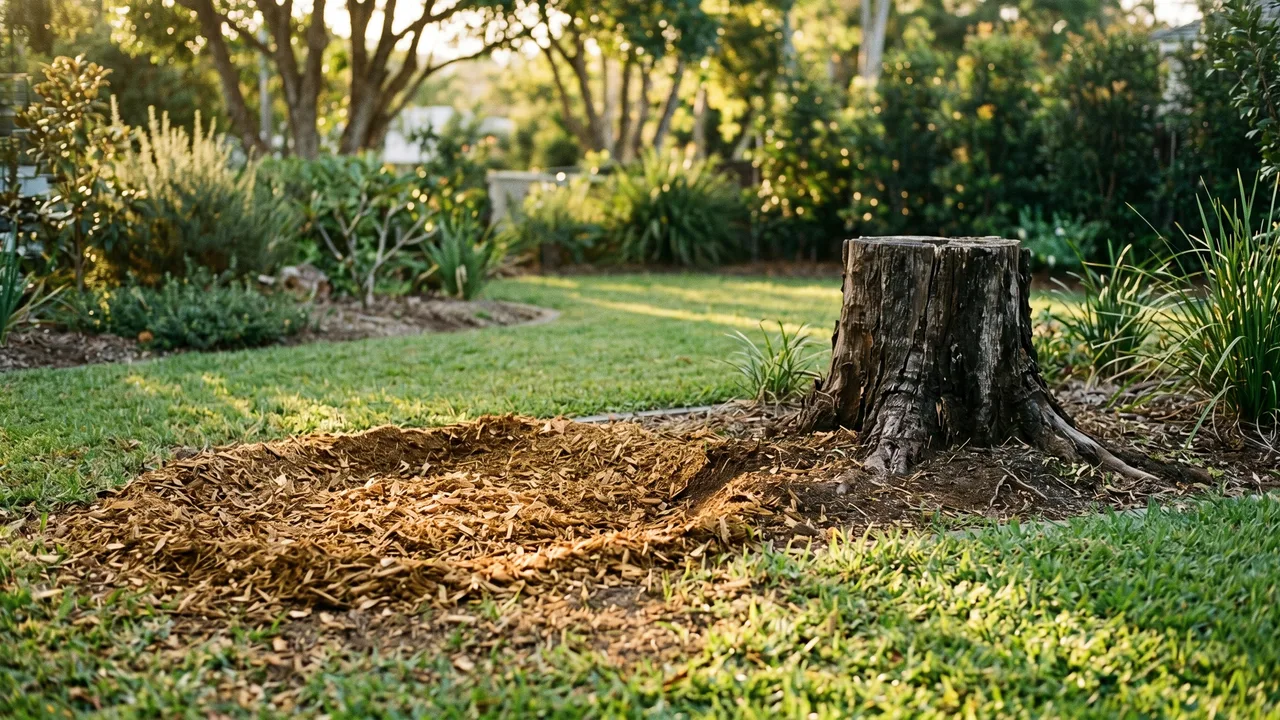
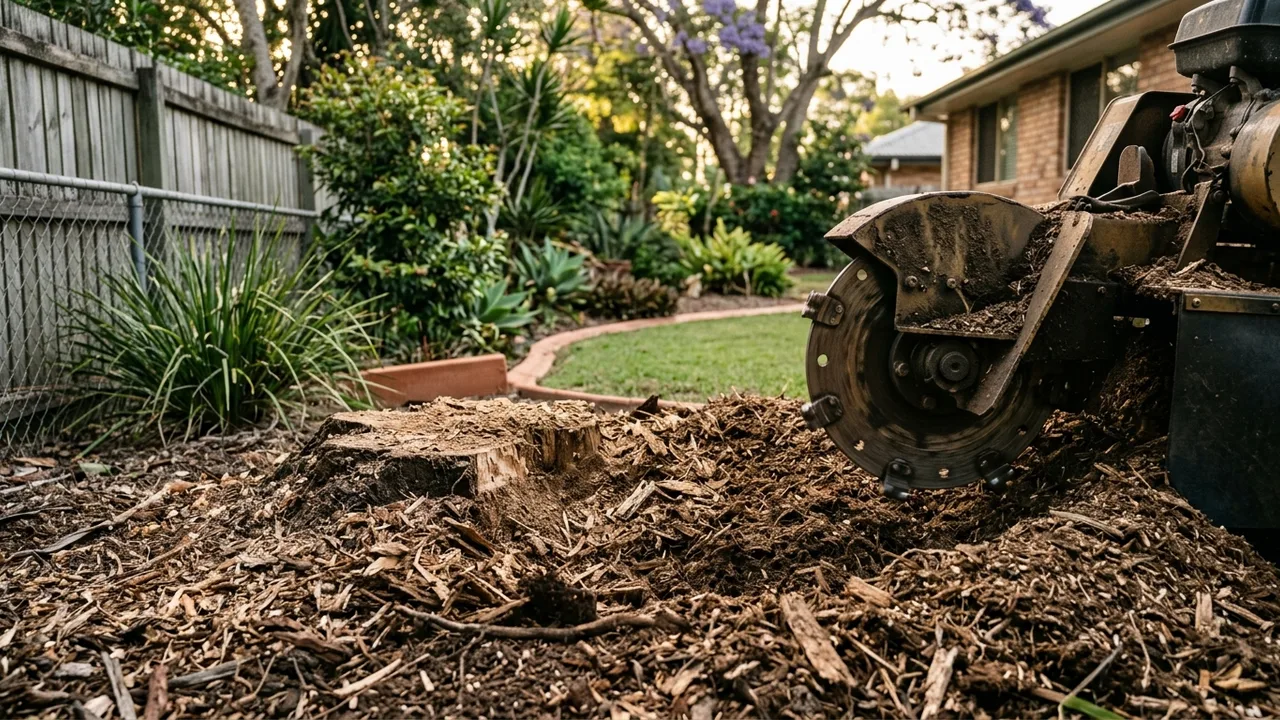
A stump grinder is a petrol or hydraulic machine with a spinning carbide-tipped wheel. The operator works the wheel back and forth across the stump face, reducing the wood to chips and sawdust. Depending on the stump diameter and timber hardness, a typical grind goes 200 to 300 mm below the surrounding soil surface, sometimes deeper if the job demands it.
What stays behind is the original root system, still branching out through the soil. The stump itself is gone. The roots are not. They will decay naturally over months to years depending on the species. Most hardwood species common in Brisbane, things like brush box, camphor laurel, and poinciana, can take three to five years to break down fully underground.
The grindings (the chips and mulch produced) are often left in the hole as fill, or hauled away if the site needs to be clean. We offer both options, and it is worth deciding before the job starts rather than after.
What Full Stump Removal Involves
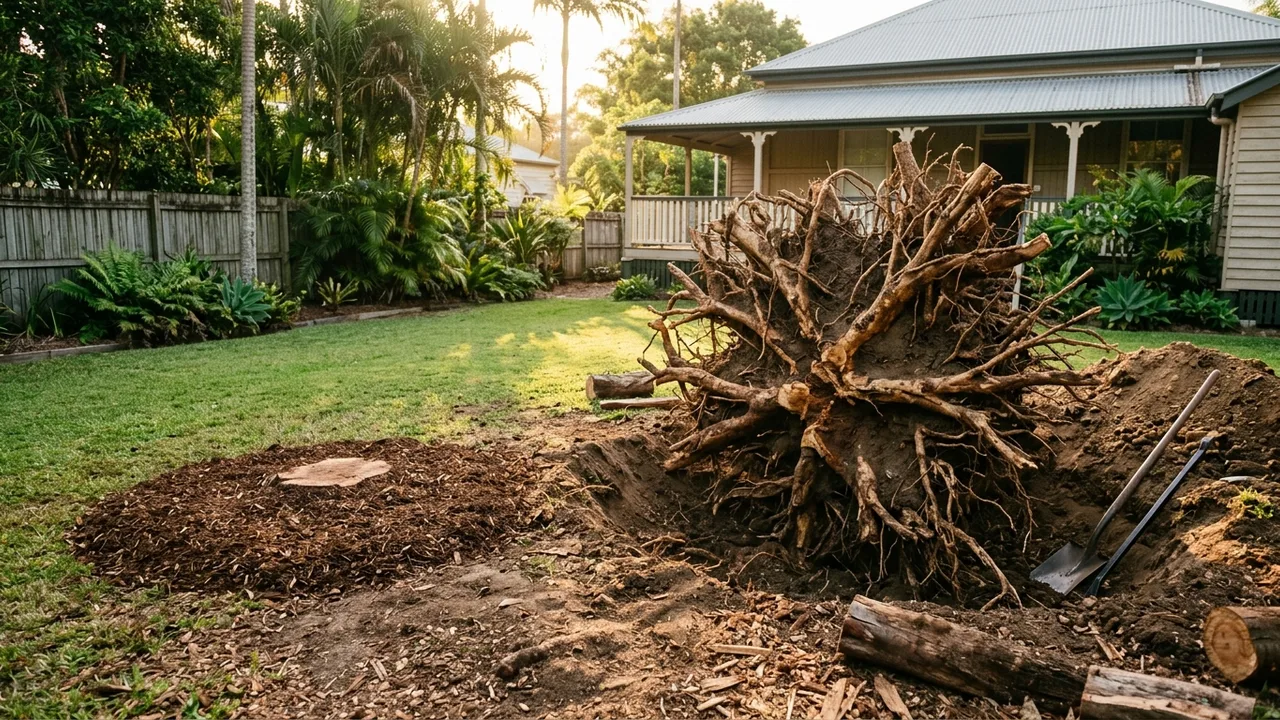
Full removal means getting the stump and as much of the root ball out of the ground as possible. This is done with an excavator, a tractor with forks, a hi-lift, or manual digging depending on the access and stump size. It is a soil-disturbance job. Expect a hole, expect disruption to the surrounding ground, and expect a higher cost and longer restoration period.
The advantage is obvious: nothing is left in the ground to decay. If you are building on the site, laying a slab, or installing a pool, you cannot have organic matter sitting underground and slowly decomposing. In those cases, full removal is not optional, it is the correct method regardless of cost.
For most residential situations in suburbs like Chelmer, Graceville, or Sherwood, a standard backyard tree removal does not require full extraction. Grinding does the job cleanly. But there are exceptions, and that is where the decision gets more interesting.
When Grinding Is the Right Call
Grinding suits the majority of residential stump jobs. If you are returfing, putting in a garden bed, laying a path, or just removing an eyesore, grinding achieves the outcome cleanly and with minimal disruption. The root system decomposes in place and, in most cases, causes no problems.
In Brisbane's Inner West, a lot of blocks have mature trees removed for one of a few common reasons: the tree has died, storm damage has brought it down (we handle emergency grinds after exactly these situations), or a renovation is creating new outdoor space. In all of those scenarios, grinding is typically sufficient.
Grinding is also significantly cheaper than full removal. On a standard residential stump in the 300 to 600 mm diameter range, grinding typically costs $200 to $450. Full mechanical removal of the same stump can cost two to four times that once equipment hire, labour, and site restoration are factored in.
One honest caveat: if the tree was a species known to sucker (poinciana is a notable offender in this part of Brisbane), leaving the root system in place can sometimes lead to regrowth shoots appearing in the lawn for a season or two. It is not universal, but it is worth knowing before you assume the job is completely finished.
When Full Removal Is Worth the Extra Cost
There are situations where leaving roots underground creates a real problem rather than a theoretical one.
Construction and concreting. If a slab, footing, or retaining wall will be poured over or near the root zone, decaying organic matter leads to subsidence. Engineers and concreters will tell you this plainly. Grind and fill is not an adequate preparation for structural work.
Pool excavation. Pool installers in suburbs like Indooroopilly and St Lucia often quote separately for root removal during excavation because they hit it regardless of what was removed above ground. If you know a pool is planned, arranging full removal beforehand is often cleaner than letting the pool crew deal with it mid-dig.
Aggressive root systems near infrastructure. Some species send lateral roots a surprising distance. Fig trees are the obvious example. If the root system is already lifting your driveway or threatening a stormwater line, grinding the stump does not stop those lateral roots from continuing to move, at least in the short term. Our Root System Removal service addresses this specifically, using deep grinding and mechanical extraction of the main lateral runs rather than just the stump face.
Replanting in the same spot. If you want to plant a new tree exactly where the old one was, grinding leaves the old root mass in the way. In practice, most people plant slightly offset, but if you have a fixed planting position for structural or aesthetic reasons, full removal gives you a clean start.
What Happens to the Grindings
This gets overlooked in most articles on the topic, but it matters for how your yard looks and functions afterwards.
Stump grindings are a coarse mix of wood chips, bark, and soil. Left in the hole, they can be mounded slightly to allow for settling. They are not ideal as a direct topsoil substitute because fresh wood chips tie up nitrogen as they decompose. If you are returfing directly over the grind site, it is worth topping the chips with a layer of clean topsoil, typically 50 to 75 mm, before laying turf or sowing seed.
If you would rather not deal with it, we offer a Mulch Clean and Haul service: the grindings come off site entirely, the hole is assessed, and you start with a cleaner base. For small stumps it is sometimes not worth the extra cost. For a large poinciana or camphor laurel grind producing a wheelbarrow or more of material, most people find the clean-up option worth it.
The Honest Trade-Off Summary
Here is the plain version of the decision:
- Grinding is faster, cheaper, and sufficient for most residential situations. Roots stay in the ground and decay over time. Suitable for turf, garden beds, paths, and general tidying.
- Full removal is disruptive, expensive, and necessary when structural work is planned, when the root system is actively damaging infrastructure, or when you need a completely clean site.
- Root system removal sits between the two. It does not pull every root, but it targets the problem laterals mechanically. It is the option worth considering when you have root damage to a path or driveway without the need (or budget) for full excavation.
Most people asking about this decision are dealing with a standard backyard stump after a tree removal. In that situation, grinding is almost certainly the right answer. If you have a specific concern, a construction project coming up, or a problematic species, it is worth describing the situation when you call so the right method gets quoted from the start.
We cover Chelmer and the surrounding suburbs across Brisbane's Inner West, including Indooroopilly, Taringa, Graceville, Sherwood, Corinda, St Lucia, Yeronga, Fairfield, and Moorooka. If you have a stump you are unsure about, a quick call to describe the size, species if known, and what the site will be used for afterwards is usually enough to point you in the right direction before any money changes hands.
Quick answers