Stump Grinding guide
Tree Roots Are Lifting My Path. Will Stump Grinding Fix It?
Tree Roots Are Lifting My Path. Will Stump Grinding Fix It?
Stump grinding can absolutely be part of the fix, but it depends on what stage the problem is at. If the tree is already gone and a stump is still in the ground, grinding that stump and its surface roots is usually the most practical solution. If the tree is still standing, you have a different decision to make first.
Here is what you actually need to know.
Why Roots Lift Paths in the First Place
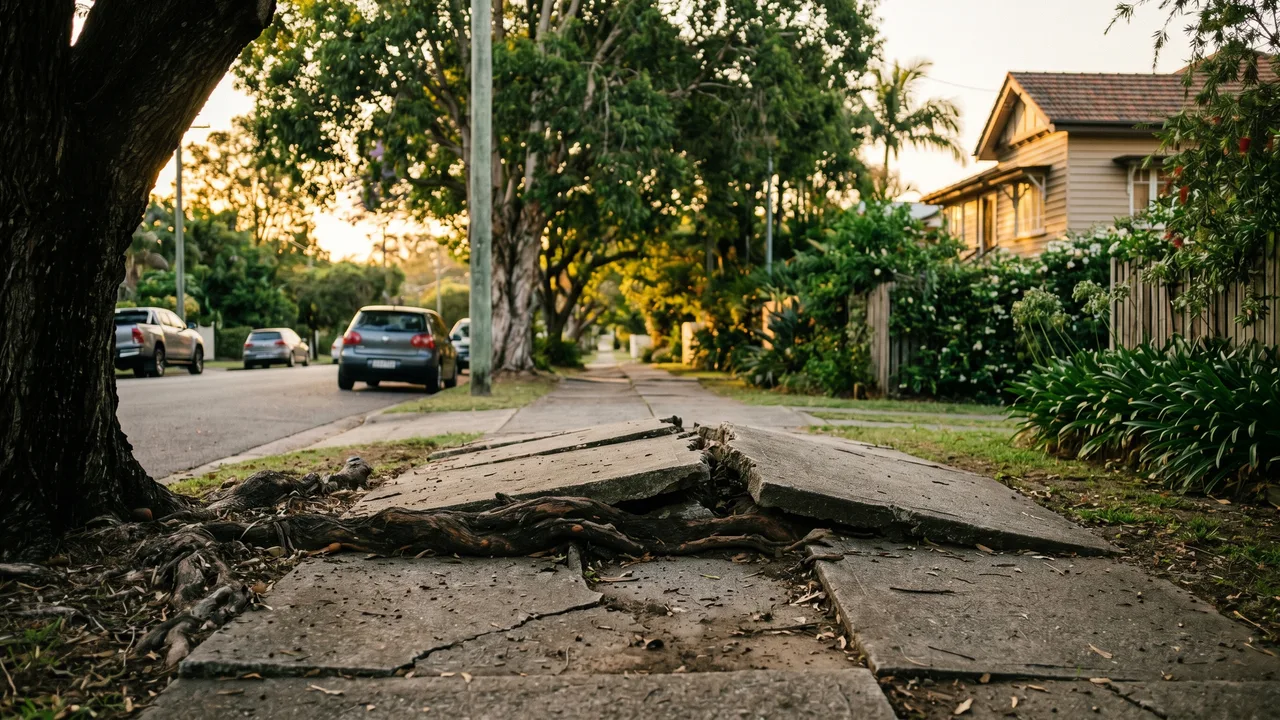
Tree roots follow moisture and oxygen. In Brisbane's Inner West, that often means they grow laterally along the top 30 centimetres of soil, right where your concrete or paved path sits. The roots thicken each year, and once they reach a certain diameter they generate enough pressure to crack and heave solid concrete.
A few species are particularly aggressive in this part of Brisbane. Ficus varieties (fig trees), Jacarandas, Camphor Laurels, and large Poinciana are common culprits in suburbs like Chelmer, Graceville, Sherwood, and Corinda. Many of these were planted decades ago when the lots were bigger and the trees were small. Now the canopy is magnificent and the root system is enormous.
The other factor is soil type. The red clay soils common through much of the Inner West shrink and swell with moisture changes. That movement can accelerate root-related cracking because the concrete is already under stress. Roots exploit weaknesses that the soil has already started.
What Stump Grinding Actually Does (and What It Does Not)
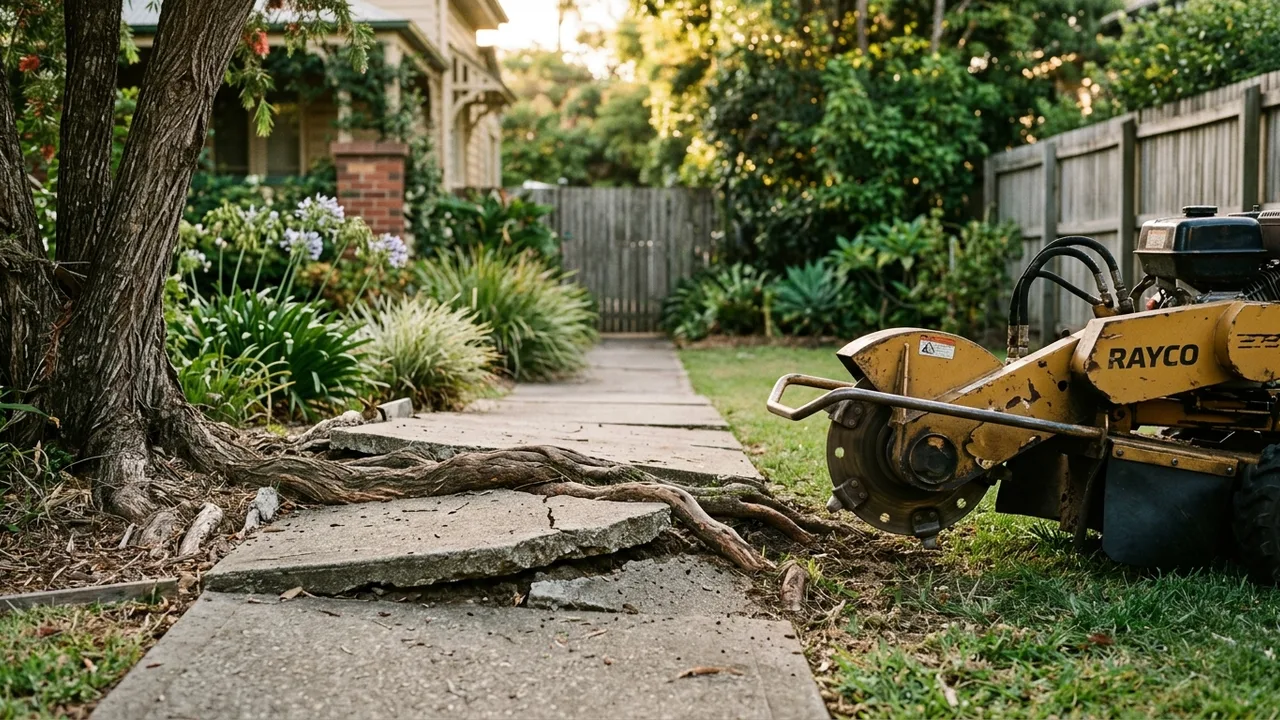
A stump grinder is a powerful machine with a rotating cutting wheel. It grinds the stump down to well below the surface, typically 200 to 300 millimetres deep, and can also be run along surface roots that have pushed up nearby paving.
What grinding does:
- Eliminates the stump so it cannot reshoot or continue growing
- Removes the immediate mechanical pressure from the root mass that is actively heaving your path
- Leaves a clean, fillable void rather than a permanent obstacle
- Makes path repair or replacement physically possible
What grinding does not do:
- Remove every root across the entire yard (deep lateral roots that are not causing surface damage are usually left to decay naturally)
- Undo the damage already done to your path (that still needs repair separately)
- Guarantee that other roots from a different tree are not also involved
This distinction matters. If two trees are contributing to a lifted path and you only deal with one stump, the second set of roots will keep moving. A good assessment before any grinding starts will identify whether one root system or several are the cause.
The Root System Removal Service: When Standard Grinding Is Not Enough
Standard stump grinding addresses the stump and the visible crown of roots directly around it. For paths, driveways, and garden edges, the problem is often the surface roots running away from the stump, sometimes two, three, or four metres away from where the tree stood.
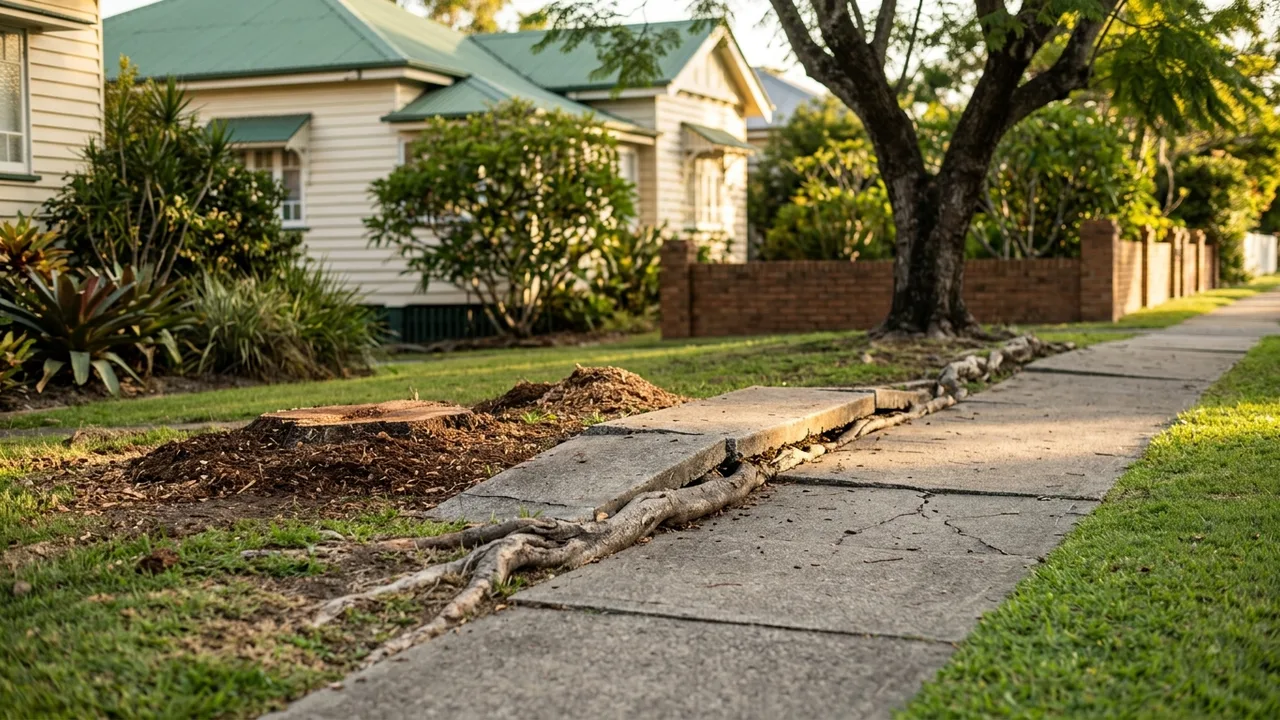
That is where root system removal comes in. This involves deep grinding and excavation along the root run, not just the stump itself. The grinder is tracked along the lifted section of path, cutting the offending root back to a depth and length that removes the heaving pressure.
In practical terms, it means you can then have the path relevelled or relaid without the same roots pushing it up again. Without removing the root first, a paver or concretor is just relaying the path on top of an active problem.
If the tree is still alive, this approach gets more complicated. Cutting major roots can destabilise a large tree, sometimes fatally. In that situation, a qualified arborist should assess the tree's health and structure before any root work begins. Grinding roots from a live tree without that advice is not something we would recommend.
The Practical Decision: Remove the Tree First, or Deal With Roots Directly?
If the tree is still standing and you want to keep it, your options are limited. Selective root pruning (done carefully by an arborist, not mechanically) can sometimes reduce heaving pressure, but it is a compromise, not a cure. The roots will regrow. You may be managing the symptom indefinitely.
If the tree is beyond saving, diseased, structurally dangerous, or simply not worth preserving, removal followed by stump and root grinding is the cleanest outcome. Once the stump is ground and the relevant surface roots are addressed, the path can be properly fixed and the problem does not return from that tree.
Here is a rough cost framework for context:
- Stump grinding for a single medium stump: typically $200 to $400
- Surface root removal along a path run of a few metres: typically $300 to $600 depending on root depth and access
- Full job with chip cleanup and backfilling: add $100 to $200 for most residential sites
These are typical ranges for the Chelmer and broader Inner West area. Tight access, hard clay, and large root diameter all push costs toward the higher end. Multi-stump jobs and combined root work on the same visit cost less per item than calling twice.
What Happens After the Grinding: Repairing the Path
Grinding removes the cause. Fixing the path is a separate trade. Most concretors and pavers in Brisbane will not quote a path repair until the root issue is resolved, because they know the job will fail again if the root is still active.
After grinding, the void left by the stump and root work is typically backfilled with the wood chip spoil from the grinding process, or with clean fill if the chip volume is insufficient. The chip does break down over time, which can cause minor settling in the first year or two. For path work specifically, it is worth asking for the chip to be removed and a compactable fill used instead. That way the concretor or paver has a stable base.
We include chip and debris cleanup as a standard option, and for any job where path or driveway repair is coming next, we typically recommend opting for full chip removal and proper backfilling.
A Practical Recommendation Before You Book Anything
Have a look at the lifted section of path and trace the root back visually, if you can. Where does it seem to originate? Is the tree still there, or just the stump? Is it one root or several coming from different directions?
If the tree is gone and there is a visible stump within a few metres of the damage, stump grinding with root system removal along the path run is very likely to solve the problem. That is a straightforward job and worth quoting.
If the tree is still standing, get an arborist to look at it before committing to anything. Some councils in Brisbane require development approval for removal of certain protected species, including many large figs. Your local Brisbane City Council tree map is a reasonable starting point for checking whether the tree is listed.
Once the tree question is resolved, the grinding and root removal work is honestly not complicated. The machines are purpose-built for it, and on most residential blocks in Chelmer, Sherwood, Graceville, and surrounding suburbs the access is manageable.
If you want a straight answer on whether grinding will fix your specific situation, we are happy to take a look. No pressure; sometimes the honest answer is that something else needs to happen first, and we would rather tell you that than take a job that will not actually solve your problem.
Quick answers