Stump Grinding guide
What Can You Do With the Mulch Left Behind After Stump Grinding?
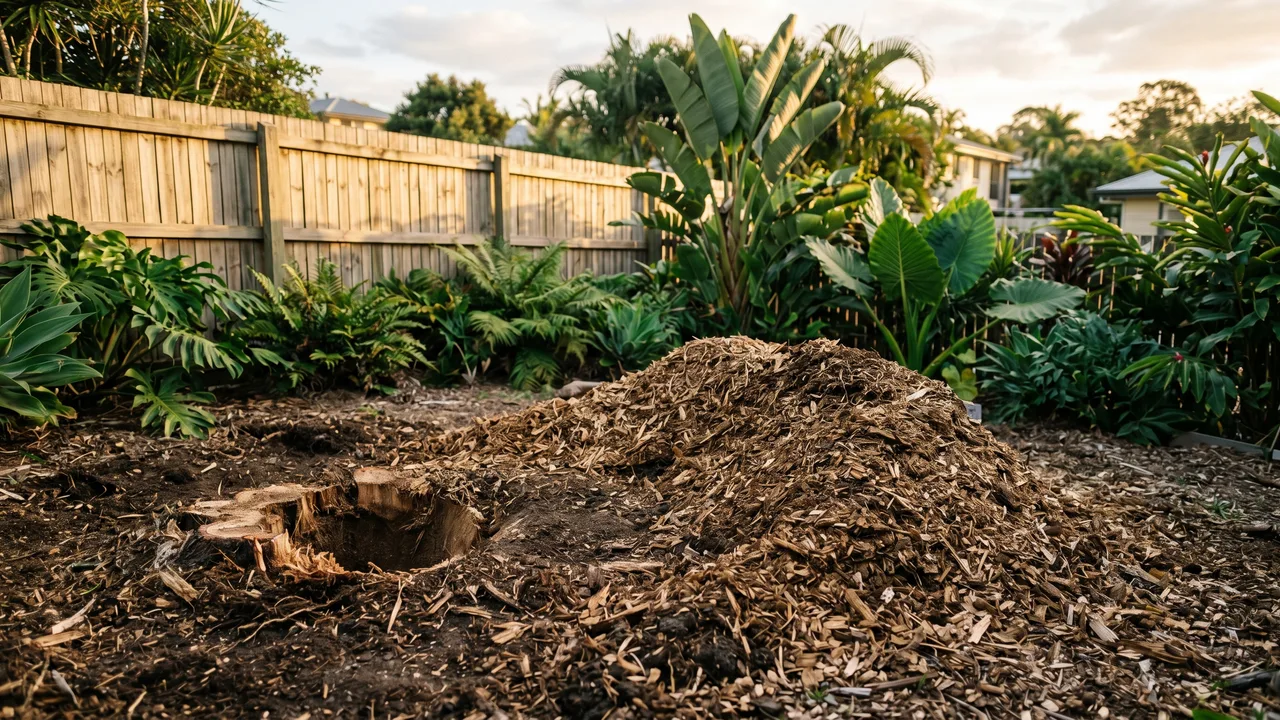
The mulch left behind after stump grinding is wood chip and sawdust from the ground-up stump and roots. Most of it is genuinely useful. You can spread it straight onto garden beds, compost it, use it as path cover, or have it hauled away if none of that suits your situation.
What Stump Grindings Actually Look Like
It helps to know what you are dealing with before deciding what to do with it.
A freshly ground stump produces a mix of coarse wood chips, fine sawdust, and soil that got caught up in the grinding process. The ratio depends on the tree species, how deep the grind went, and the condition of the timber. A healthy hardwood stump - think a mature brush box or flooded gum common across the Chelmer and Sherwood area - gives you mostly dry, fibrous chips. A soft, rotten stump produces something closer to damp crumble with a lot of soil mixed through.
The volume can surprise people. A medium stump, say 400 mm across, typically generates a wheelbarrow or two of material. A large old fig or camphor laurel (common in the older streets of Indooroopilly and St Lucia) can fill several wheelbarrows. That volume is useful if you have garden beds to cover. It is less useful if your yard is small and fully paved.
One thing worth knowing: grindings from camphor laurel contain camphor oil, which is mildly allelopathic. That means it can suppress the germination of some seeds. Using it as mulch under established plants is fine. Mixing it into a veggie patch or a seed-raising bed is a bad idea until it has composted down for a year or more.
Using Grindings as Mulch in Garden Beds
This is the most practical option for most Brisbane homeowners. Spread the chips 75-100 mm deep over garden beds, keeping them a hand-width away from the base of any plants. Moisture retention, weed suppression, and a gradual feed of organic matter as the chips break down - it does all three.
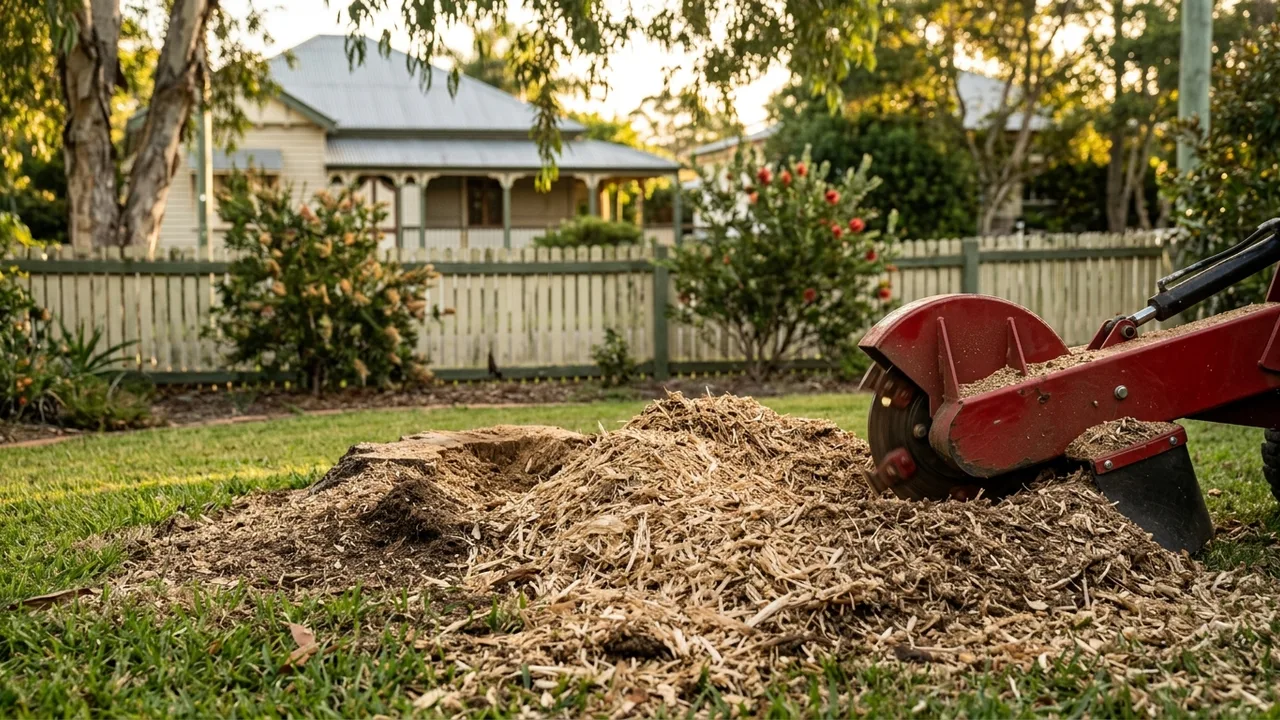
Fresh wood chips do have one genuine trade-off. As they decompose, soil microbes consume nitrogen to do the work. This can cause a temporary nitrogen drawdown in the top layer of soil directly under the mulch. The effect is mostly superficial and mostly short-lived, but if your garden beds are already low in nitrogen or you have shallow-rooted annuals, it is worth top-dressing with a slow-release fertiliser before you spread the chips.
For the subtropical Brisbane climate - hot, humid summers with heavy rainfall - a thick mulch layer pays off well. The Inner West suburbs like Graceville, Corinda, and Yeronga have heavy clay soils in many parts. Mulch helps protect that clay from compaction during summer downpours and reduces the hard cracking you get in dry spells.
Avoid using grindings from stumps that had significant fungal rot or root disease. If your tree was removed because of white rot, Armillaria (honey fungus), or similar, the grindings may carry fungal material that you would rather not spread through healthy garden beds.
Composting the Chips Over Time
If you have more grindings than your garden beds need, composting the excess is a sound option. Wood chips are a carbon-rich (brown) material, so they compost best when layered with nitrogen-rich (green) material - lawn clippings, kitchen scraps, or spent garden plants.
The chips break down slowly on their own. In Brisbane's heat and humidity, a well-managed compost pile with a good carbon-to-nitrogen balance can turn coarse grindings into usable compost in around 6-12 months. Left in a heap without turning or greens added, they will still break down, but it might take 2-3 years.
A simple approach: form a ring of grindings roughly a metre across, pile your garden waste and kitchen scraps into the centre, and use the chips as a dry layer between each addition. The outer ring slowly feeds into the compost as you work.
If you live in one of the tighter block sizes around Moorooka or Fairfield, a compost tumbler handles smaller volumes of chips well and keeps things neat on a compact property.
Filling the Grinding Hole and Levelling the Site
After grinding, you are left with a depression where the stump was. This is typically filled with the grindings themselves, topped with soil. There are a couple of things to factor in here.
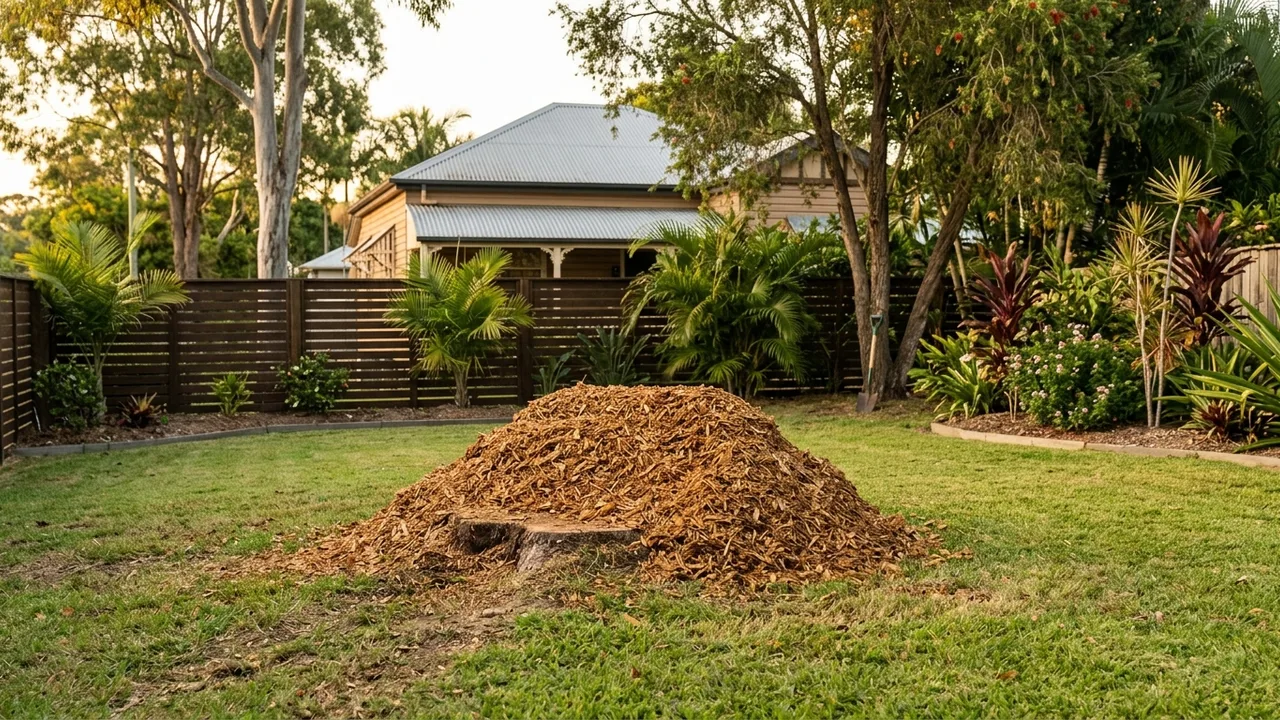
Wood chips compact and decompose over time. A hole filled entirely with grindings will sink, sometimes significantly, over the first 12-24 months. If you are planning to lay turf over the area, the standard advice is to remove as much of the grinding material as practical, backfill with clean topsoil, and either mix a small amount of grindings into the lower layers or dispose of them separately. This gives you a stable, even surface that does not sink under your lawn.
If the area is going into a garden bed rather than lawn, you have more flexibility. A mix of grindings and topsoil is fine as a base, with the understanding that you may need to top up with more soil once it settles.
For path or driveway reinstatement (say, after a root system removal along a Corinda driveway), do not use grindings as fill under paving or concrete. They will decompose, leave voids, and cause subsidence. Use compacted road base or clean fill there.
Using Grindings on Informal Paths and Bare Areas
Loose wood chip paths are a practical and low-cost option for informal garden walkways, under clotheslines, or on bare patches where you do not want grass but also do not want mud. They look reasonable, they absorb foot traffic reasonably well, and they eventually break down into the soil.
For Brisbane's wetter months, a chip path on bare earth can turn slippery if the chips get very fine and wet. Coarser grindings handle this better than fine sawdust-dominated material. If your grind produced mostly fine material, either compost it or mix it with coarser organic matter before using it as a path surface.
Keep chip paths away from the base of your house and off timber stumps of older Queenslanders - a moisture-retaining layer against timber framing is an invitation for white ants.
When Having It Hauled Away Makes More Sense
Not every situation calls for keeping the grindings. If the volume is large, the species is unsuitable for mulch (camphor laurel, for example), the yard is fully paved, or you simply do not have a use for it, removal is the practical answer.
We offer a mulch clean and haul service precisely for this. After the grind is complete, we remove the grindings and surface debris off-site. It adds cost - typically in the range of $100-$250 depending on volume and site access - but it leaves you with a clean, empty site ready for your next step, whether that is turf, a garden bed, or paving.
The honest trade-off: if you have established garden beds and healthy stumps, keeping the grindings is almost always the better value choice. The material is genuinely good mulch and costs nothing beyond the grind itself. Paying for removal makes sense when the grindings create more problems than they solve for your specific site.
A Sensible Way to Think About It
The default should be: keep the chips if you can use them. Brisbane gardens respond well to mulch, especially on the heavier soils of the Inner West. The exceptions are diseased timber, species with allelopathic compounds, and situations where you need stable fill rather than organic material.
If you are not sure what you have, take a photo of the grindings and the remaining stump cavity before you spread anything. It only takes a moment and it helps you make a cleaner decision.
If you have a stump coming up and want to know roughly what volume of material to expect, or whether removal makes more sense for your site, feel free to get in touch. We are based in Chelmer and cover the surrounding Brisbane suburbs. A quick conversation usually saves a lot of second-guessing.
Quick answers