Stump Grinding guide
What Should You Do With the Wood Chips After Stump Grinding?
What to Do With the Wood Chips After Stump Grinding
The short answer: keep them, use them as mulch, or ask us to take them away. Wood chips from stump grinding are genuinely useful in a Brisbane garden, but they do come with a few conditions worth understanding before you pile them straight onto your veggie bed.
Here is everything you need to know to make a sensible call.
What You Actually Get After Grinding
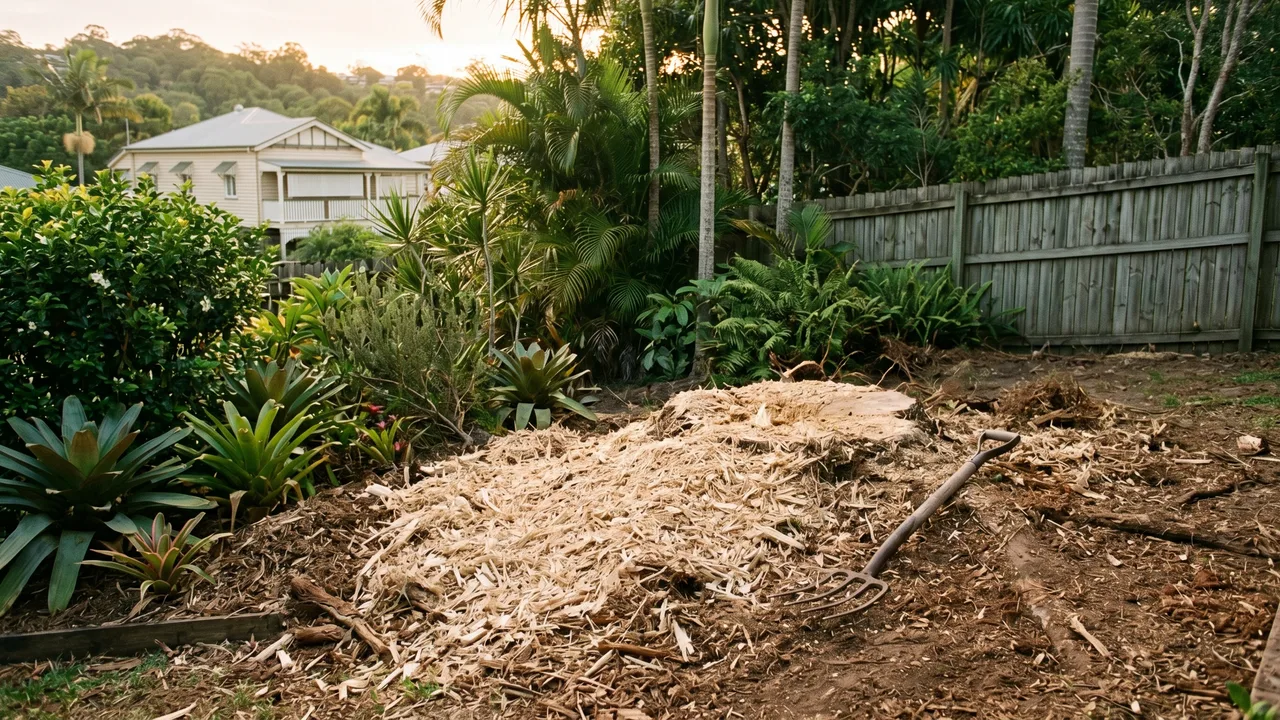
When a stump grinder works through a tree stump, it doesn't leave a neat pile of uniform wood chips. What comes out is a mix of shredded wood, bark, and soil. The ratio depends on how deep the operator grinds, how old the stump was, and how much root material gets caught in the process.
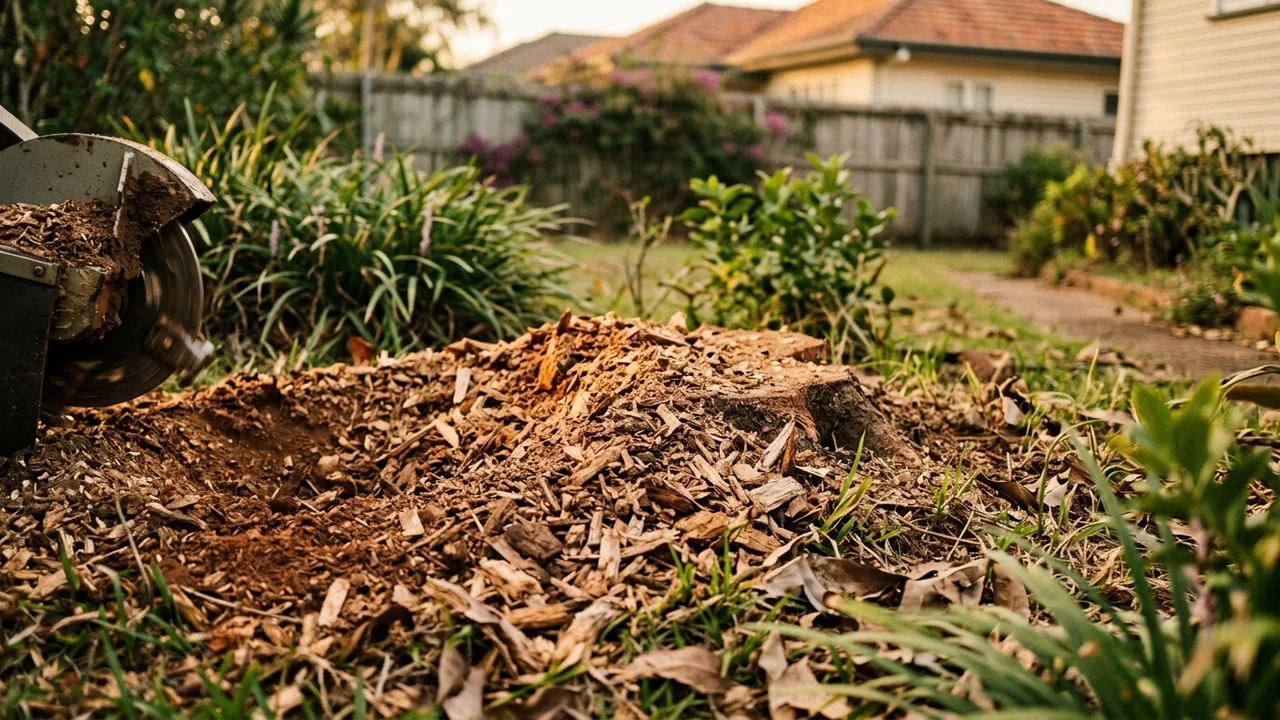
A freshly ground stump from a mature jacaranda or poinciana (both common in suburbs like Chelmer, Graceville, and Sherwood) can produce a surprising volume of chips. A medium-sized stump grinding job typically generates somewhere between one and three wheelbarrow loads. A large stump with extensive surface roots can produce considerably more.
The material is usually damp and chunky straight after grinding, not the fine decorative mulch you buy in bags from a nursery. It looks rougher, and it behaves differently too. That's worth keeping in mind before you decide what to do with it.
Using the Chips as Mulch: The Good and the Realistic
Fresh wood chips make a decent garden mulch, but there is one thing people often worry about: nitrogen draw-down.
When raw wood breaks down, the microbes doing that work consume nitrogen from the surrounding soil. If you dig the chips in, or apply them too close to the root zones of plants you care about, you can temporarily starve those plants of nitrogen. Yellowing leaves are a common sign.
The practical fix is straightforward. Lay the chips on top of the soil rather than mixing them in, keep them 100 to 150 millimetres away from plant stems and trunks, and they'll break down over time without robbing your garden beds.
Used this way, wood chips from stump grinding work well for:
- Suppressing weeds along fence lines or under established trees
- Retaining moisture in garden beds during Brisbane's dry winter months
- Filling low spots in lawn areas that aren't being planted soon
- Pathways between garden beds in a productive or ornamental garden
The chips are not ideal straight on veggie beds or close to shallow-rooted annuals. For those areas, wait until the material has had a few months to partially break down, or use it elsewhere and buy bagged compost for the veggie patch.
One local note: if the stump you had ground was a camphor laurel (fairly common across the Inner West and Sherwood corridor where older gardens still have them), the chips may contain allelopathic compounds that can inhibit germination and growth in surrounding plants. It's worth letting camphor chips break down in a back corner for at least six months before using them near anything you want to grow.
Composting the Chips: Slower but Worth It
If you have a functioning compost system, wood chips from stump grinding can be a useful brown (carbon-rich) ingredient. They help balance out a pile that's gotten too green and wet, which is a common problem in Brisbane's humid summer months when lawn clippings and food scraps dominate.
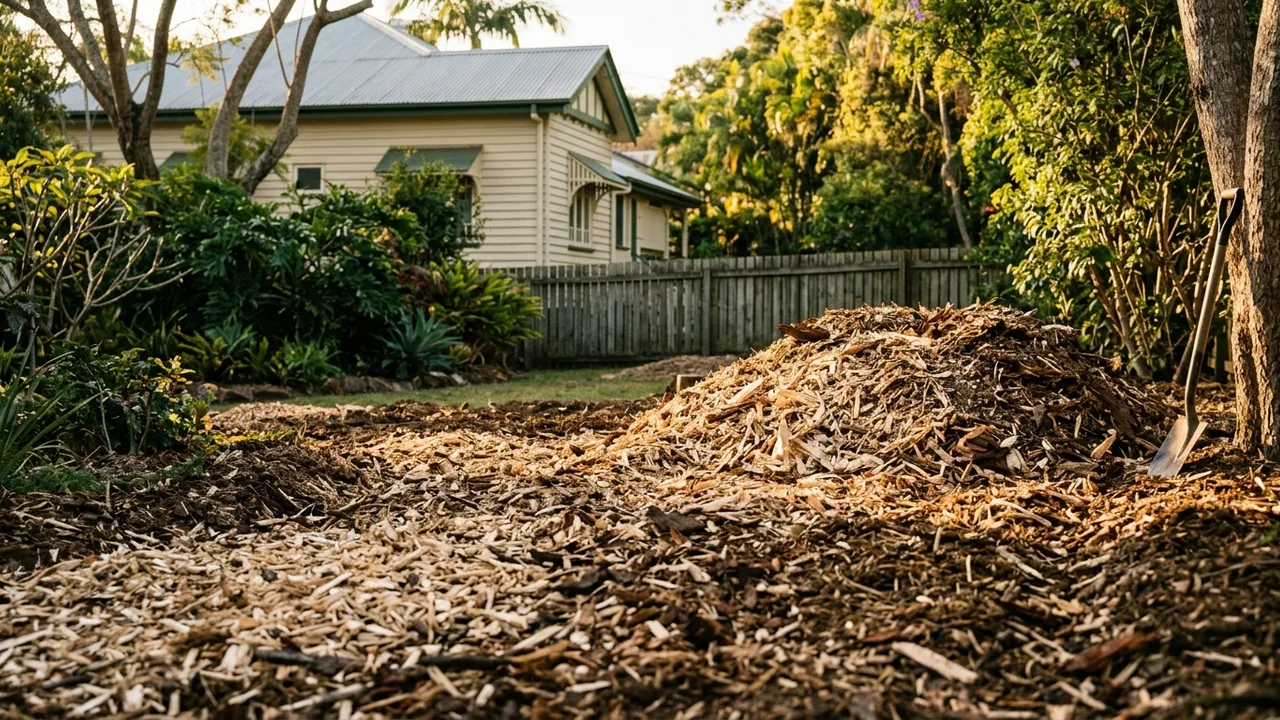
The trade-off is time. Chunks of raw wood take longer to break down than finer materials. Turning the pile regularly speeds things up, and keeping the moisture level right (moist, not soggy) helps. Realistically, you're looking at six months to a year before heavily chipped material is ready as finished compost.
If you have a hot composting setup and you're running it properly, you can accelerate that. Most home composters aren't running hot systems, though, so patience is the honest expectation.
Leaving Them in the Hole: When It Makes Sense
Sometimes the simplest option is to use the chips to backfill the void left by grinding. After the stump is ground down below ground level, there's a hollow filled with loose chip material. You can rake it flat, top it with soil, and let it settle.
This works fine if you're not planning to turf or plant the spot immediately. The chips will compact and break down over months, but the area will likely sink slightly as they do. If you're planning to lay turf straight away, it's better to remove most of the chip material from the hole, bring in good topsoil to fill and firm the area, then turf over that.
For areas being prepared for hard landscaping, fencing, or a new pool (something we see regularly across Indooroopilly, St Lucia, and Taringa where renovation activity is high), you'd want the hole cleared properly and backfilled with compacted fill, not left with loose organic material underneath.
Getting Them Removed: When That's the Right Call
Not everyone has the space, time, or inclination to manage a pile of wood chips. That's a completely reasonable position, and it's one reason we offer chip and debris cleanup as part of our stump grinding service.
If you've had a large stump ground on a small suburban block, the chips can take up significant garden space. If you're preparing a site for a build, landscaping, or pool installation, loose organic material left in situ will cause problems. And if the tree species has any concern around the chips (camphor laurel, some eucalypts), removal is often the cleanest choice.
When we take the chips away, we haul them off-site so you're not left managing disposal yourself. It adds a modest cost to the job, but on a site preparation or multi-stump job, it's often worth it to have the area clear and ready to work.
The trade-off: if you have large garden beds or a property with room to spread the chips usefully, paying to remove material that would otherwise do good work in your garden doesn't always make sense. It comes down to your situation.
A Practical Decision Framework
Here's an honest way to think through it:
- Keep and use as path or bed mulch if you have established garden beds away from food crops, or informal paths that need surfacing. Low cost, good outcome, minimal effort.
- Add to compost if you already compost and have time to manage the breakdown. Good long-term benefit, requires some patience.
- Backfill and level if the stump was in lawn and you just want the area to settle and green over without immediate replanting. Works fine with low expectations for the first season.
- Request removal if you're doing site prep work, have no use for the volume, or had a species like camphor laurel ground out. Clean finish, small extra cost.
There's no universally right answer. The chips aren't waste; they're a byproduct with genuine value if you have a use for them. But they're not magic garden amendment either, and forcing a use that doesn't suit your block doesn't make sense.
A Final Word
If you're not sure how much material a job will produce, ask before the grinding starts. We're happy to talk through the likely volume, what species was involved, and whether removal makes sense for your block. For properties across Chelmer, Graceville, Yeronga, Fairfield, and the rest of the suburbs we cover, the site conditions vary enough that a quick conversation before the job usually saves time and surprises after.
If you'd like a quote that includes chip removal, or just want to know your options, get in touch and we'll talk it through.
Quick answers